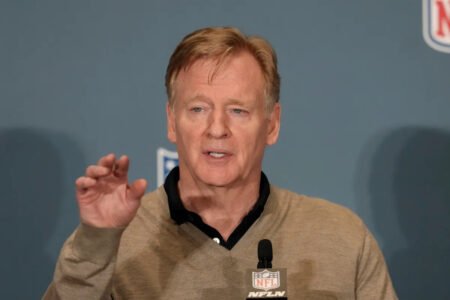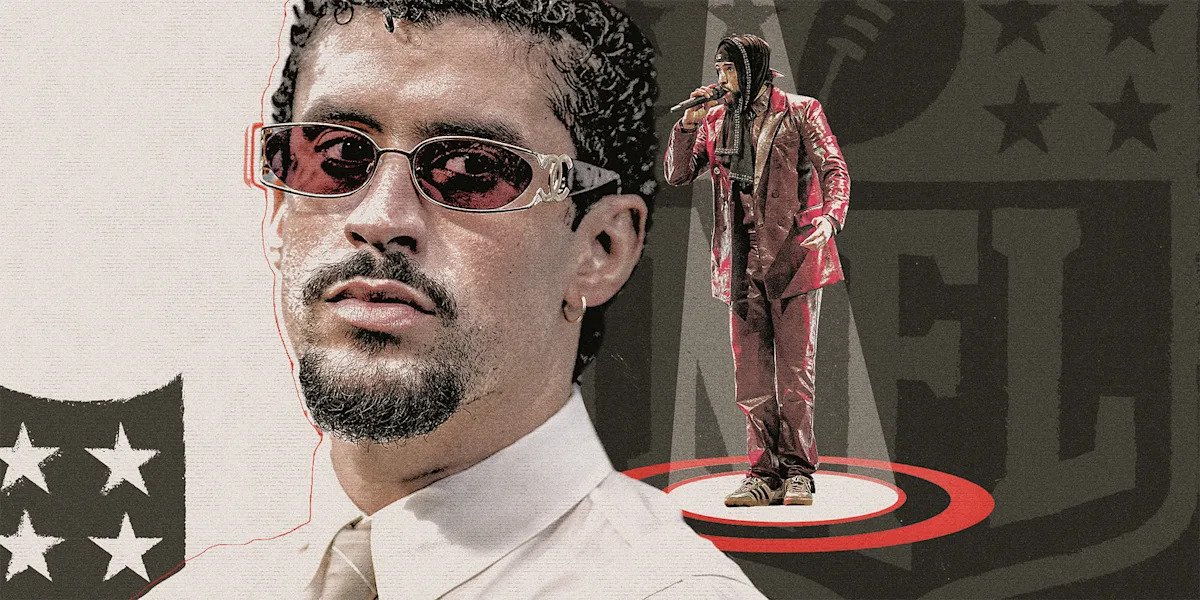
SAN JOSE, Calif. — The messages in NFL commissioner Roger Goodell’s pre-Super Bowl news conference this week were subtle, but also solidly implied.
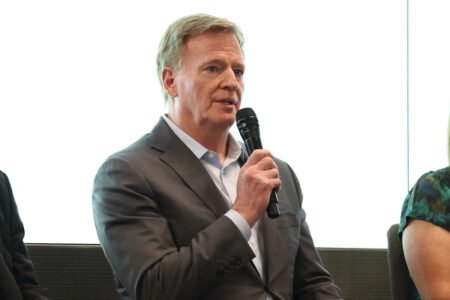
Asked about a potential ICE presence during Sunday’s game between the Seattle Seahawks and New England Patriots, Goodell stayed clear of repeating the acronym for U.S. Immigration and Customs Enforcement on Monday. Instead, he steered into a vague response, talking about layered, but nonspecific, government involvement from the local, state and federal level. He used the term “unique assets” to describe what he believes is a traditional high-end security detail on Super Bowl Sunday.
Advertisement
He didn’t say ICE would be present. He didn’t say ICE wouldn’t be present.
And when it came to the league’s forthcoming Super Bowl halftime show featuring global reggaeton star Bad Bunny — who declared “ICE out” to begin a Grammy Awards acceptance speech the previous night — Goodell had a diplomatic but seemingly pointed response about the artist’s performance on the NFL’s biggest stage. Something along the lines of: That was the Grammy’s platform. This is the Super Bowl platform. Bad Bunny knows the difference.
Or as Goodell put it:
“Listen, Bad Bunny is — and I think that was demonstrated [at the Grammy Awards] — one of the great artists in the world, and that’s one of the reasons we chose him. But the other reason is he understood the platform he was on and that this [Super Bowl] platform is to use to unite people and to be able to bring people together with their creativity, with their talents, and to be able to use this moment to do that. I think artists in the past have done that. I think Bad Bunny understands that, and I think he’ll have a great performance.”
An advertisement for the Super Bowl halftime show featuring Bad Bunny is seen at the Moscone Center in San Francisco. (Photo by Chris Graythen/Getty Images)
(Chris Graythen via Getty Images)
He didn’t explicitly say Bad Bunny would stick to music. He didn’t explicitly say Bad Bunny wouldn’t stick to music. (Bad Bunny might have further more to say on the matter Thursday, when he’s scheduled to hold a news conference in San Francisco as part of Super Bowl week’s promotional festivities.)
Advertisement
This is how you stay as neutral as possible if you’re Goodell — but it’s also partly a byproduct of the reality that the NFL doesn’t really know for sure what is going to happen Sunday. Nor do we as an audience. Sometimes we even watch more closely because we think something might happen. See Kendrick Lamar’s “Not Like Us” cut from last year’s halftime show, when he looked into the camera and spit out the dicey lyrical bar that could have easily been barred by the league: “Say Drake, I hear you like ‘em young …”
To this day, I’m not sure how “on board” the league was with that moment. But with some artists, that’s part of the halftime attraction. For a league that levitates between being buttoned up at times — but loose and edgy in others — the Super Bowl halftime has become a pursuit of trying to have it all. It’s partially why the NFL partnered with Jay-Z’s entertainment company, Roc Nation, in 2019 to collaborate on choosing halftime artists. To test boundaries — or at least give off the appearance of testing boundaries.
Even before that, the NFL hasn’t been able to control everything in halftime shows, whether the controversies or statements by artists were real or perceived. The infamous Janet Jackson wardrobe malfunction in Super Bowl XXXVIII was clearly not league approved. Super Bowl XLVI, when artist M.I.A. flipped off the crowd in full view of the television audience? Not approved. Beyoncé’s rendition of “Formation” in Super Bowl 50 was approved and it still sparked a sizable backlash from a portion of viewership that believed it was pushing anti-American and/or anti-law enforcement themes. Even during last season’s Super Bowl, a supporting performer hoisted a flag with “Sudan” and “Gaza” on it, in an apparent protest to ongoing conflicts in those regions.
There have been other moments, too, but the point is the NFL has only limited control of what happens Sunday.
Advertisement
Goodell knows this. And it’s part of why he has gotten fairly adept at keeping himself and the league out of corners when politics and the NFL intersect. He learned lessons from the first Donald Trump presidency, when the league navigated (often clumsily) through an anthem-kneeling controversy, the rise of social justice consciousness after the murder of George Floyd, and then a politically supercharged COVID-19 pandemic.
You learn to listen more closely, pick your battles more carefully, and to watch for corners that you can’t get out of easily. Perhaps most of all, when it comes to balancing a high-wire act between the league’s bottom line and politics, you lean toward the money until you absolutely can’t.
That’s what I thought of when I listened to Goodell on Monday. After months of culturally and politically charged denouncement of Bad Bunny as a Super Bowl halftime show — much of it driven by the Puerto Rican star’s Spanish-language music — the NFL’s reach for a larger imprint on global Latin American countries was going to test Goodell and the league’s team owners, especially at a time when detainment and deportation efforts from the current Trump administration against immigrants suspected of living in the country illegally have targeted Latin American communities inside the United States.
From the moment of Bad Bunny’s appointment as the centerpiece of the NFL’s halftime show, Goodell and the league’s franchise owners were stepping into a dispute with a segment of their own fan base. It would instantly be a political lightning rod in a country that has a mountain full of them. And it didn’t take long for Trump and leaders in Homeland Security to decry it as a halftime that promoted an anti-American agenda. Or for Turning Point USA to tap Kid Rock and other artists to create an alternative halftime show that, as Kid Rock put it this week, will “[P] lay great songs for folks who love America.”
Advertisement
Playing songs for people who “hate America” isn’t what the NFL is trying to pull off. A more dialed in reality is what Patriots owner Robert Kraft told his team’s flagship radio station about the league’s priority moving forward: “We’re gonna push like the dickens now, to make international [exposure] more important with us.”
You do that by embracing a halftime artist that has gotten arguably as much attention as the game itself. You do that by reaching out to a global Latin American audience that may not naturally overlap with your NFL audience, but suddenly feels drawn in by Sunday’s performance.
An artist who told a Grammy audience “ICE out” on the doorstep of Super Bowl week, but who followed that statement with this message:
Advertisement
“We’re not savage. We’re not animals. We’re not aliens. We are humans and we are Americans. Also, I want to say to the people, I know it’s tough to, not to hate on these days. And I was thinking, sometimes we get contaminados [contaminated]. … The hate gets more powerful with more hate. The only thing that is more powerful than hate is love. So, please, we need to be different. If we fight, we have to do it with love. We don’t hate them. We love our people, we love our family, and that’s the way to do it. With love. Don’t forget that, please.”
Read the full article here