


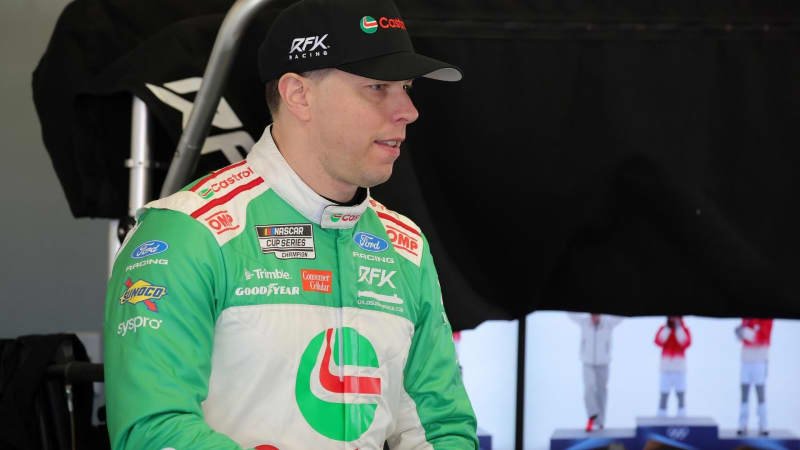
NASCAR is ultimately all about results. It doesn’t matter how brilliantly someone drives if they don’t have wins and championships to back it up. This cruel nature of the sport is something that Brad Keselowski has leaned into ahead of Sunday’s Cup Series race in Atlanta.
Racing is a team sport in which engineers, pit crew, and other clusters play a role as important as the driver. The driver’s job is to make sure that he does his part well.
Advertisement
TheRFK Racing owner detailed the reality of the sport that good results don’t always mean the driver did their part well. And bad results don’t mean a driver is less skilled. Multiple factors go into determining the result of a race, after all.
“There are a lot of factors, whether it be things that happen on the racetrack or things that happen before the race ever started, with the way their team put the car together,” Keselowski said.
“There are a lot of factors you can’t control, and what really makes a great driver to me is someone who controls their part at a high level,” he added.
A driver could finish 20th, leaving the fans unimpressed. Yet, the reality might be that he had a car only capable of finishing 30th, and drove it up the field through sheer skill. The opposite is also true.
Advertisement
A driver who finished fifth might earn widespread praise, even if it isn’t fully deserved, because the car itself was dominant and capable of winning. At times, a driver could have had a great car, done everything right during the race, and still not be able to win or achieve a good result.
Do NASCAR drivers feel bad for their competitors?
Keselowskiwas asked if it was possible for a professional to feel bad for competitors in scenarios where luck failed the driver who did everything in his power to win. “I have had races where I felt bad for people who had done everything right, and it just doesn’t come together,” he replied.
“I can’t speak for everybody else, but yeah. You’re running, and you’ll see someone who is doing a great job, and it all falls apart for them, and you’re like, ‘Man, I hope that’s not me,” added Keselowski, who also explained that the longer a driver stays in this game, the more likely he is to feel empathy for other drivers.
Advertisement
Keselowski would be hoping that such a situation doesn’t arise in Atlanta, where someone else feels such emotion for him at the end of the race.
The post Brad Keselowski Reflects on Why NASCAR’s Results Don’t Always Tell the Full Story appeared first on The SportsRush.
Read the full article here