


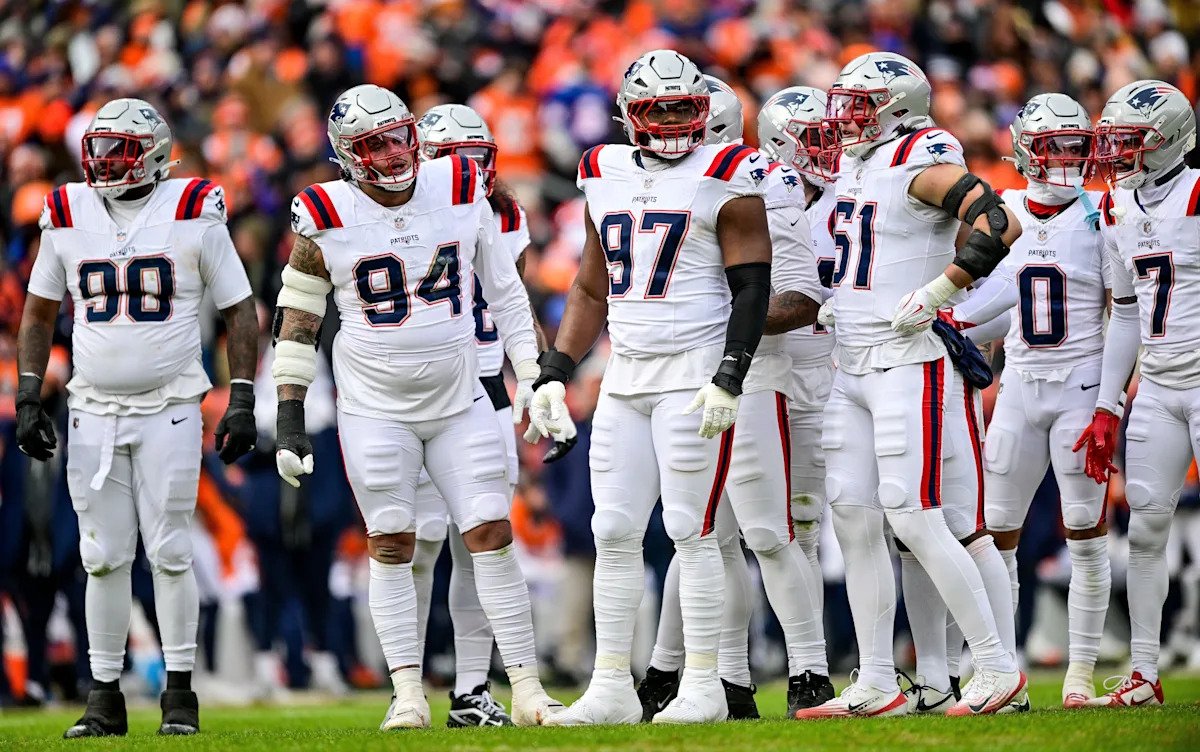
Talk about the quality of their schedule has accompanied the New England Patriots for most of the year. But while, yes, they did play one of the easiest slates in the NFL during their 14-3 regular season and did not exactly run into a murderer’s row of opponents in the playoffs either — for a variety of reasons — they simply kept doing what championships are supposed to do: play who is in front of you, and win.
As a result, the Patriots are now getting ready for a bout with the Seattle Seahawks in Super Bowl LX. Top to bottom, the NFC champions are arguably the best opponent the Patriots will have faced this season — a worthy foe standing between them and their seventh Vince Lombardi Trophy.
Advertisement
But while New England is entering the game as 4.5-point underdogs, a look at the stats shows that the two teams are actually more evenly matched than the oddsmakers would have you believe. Looking at the year in totality — i.e. including both regular season and postseason — we can see that both are among the true elites in the NFL in 2025.
For the Patriots, their journey to the Super Bowl is one of two chapters. They relied heavily on their offense, and particularly MVP-caliber quarterback Drake Maye during the regular season, before flipping the script in the playoffs: in three postseason games, the unit has been as successful as any in football.
With that all said, let’s dive deeper into the statistics entering the Super Bowl.
Advertisement
For a more detailed explanation of the numbers presented in this breakdown, please click here.
Offense
|
Category |
Patriots |
Seahawks |
|---|---|---|
|
Points/Game |
27.2 |
29.2 |
|
Yards/Game |
364.2 |
350.0 |
|
EPA/Play |
0.112 |
0.054 |
|
DVOA |
13.5% |
10.8% |
|
Success rate |
46.4% |
47.0% |
|
Scoring rate |
42.0% |
46.5% |
|
Points/Drive |
2.6 |
2.7 |
|
Turnover rate |
9.9% |
12.9% |
|
Third-down rate |
40.7% |
40.6% |
|
Fourth-down rate |
72.4% |
58.3% |
|
Red zone rate |
55.1% |
57.1% |
The Patriots entered the postseason as possibly the most effective offense in the NFL, but they have since taken a hit: their 0.155 EPA per play decreased to 0.112 in the playoffs, a result of the unit failing to produce at its established level against some of the toughest defensive units in the NFL. Needless to say, the task at hand is not going to get easier anytime soon.
That being said, the unit coordinated by Josh McDaniels has still outperformed its Seattle counterpart in several categories when looking at them through a year-long lens. Still, the Patriots’ recent struggles as well as the Seahawks’ impressive offensive display against the 49ers and Rams in the divisional and championship rounds of the playoffs means that the NFC side has actually now overtaken New England in multiple scoring categories.
|
Category |
Patriots |
Seahawks |
|---|---|---|
|
Yards/Game |
235.1 |
226.5 |
|
TDs |
35 |
29 |
|
INTs |
10 |
15 |
|
Net yards/Attempt |
7.3 |
7.6 |
|
Dropback EPA |
0.256 |
0.167 |
|
Pass DVOA |
38.9% |
36.6% |
|
Success rate |
46.4% |
47.0% |
|
YAC/Reception |
5.2 |
5.5 |
|
Drop rate |
4.3% |
3.5% |
|
Sacks |
62 |
32 |
|
Pressure rate |
37.2% |
35.0% |
The Patriots offense is running through Drake Maye, and for good reason. The sophomore passer has been outstanding this year. His team’s passing statistics look the part as well, even though they naturally have also not jumped off the page since the start of the playoffs. Just look at it from this way: New England’s league-leading 0.308 EPA per dropback has slid down to 0.256 in three postseason games alone.
Advertisement
Obviously, Maye and the Patriots passing offense are more than capable of still playing efficient football; they had some very good moments against the Chargers and Texans. However, both those games as well as the AFC Championship in Denver were marred by uneven play from the receivers (who were inconsistent getting open against man coverage), pass protection (Maye has been sacked 15 times in three games), and the young passer himself.
The Seahawks’ own passing offense has also not lit the words on fire, and ball security is a concern even after back-to-back clean sheets. Still, Sam Darnold’s recent outing against L.A. plus a supporting cast headlined by first-team All-Pro Jaxon Smith-Njigba makes this a potentially dangerous unit.
|
Category |
Patriots |
Seahawks |
|---|---|---|
|
Yards/Game |
129.2 |
123.5 |
|
Yards/Attempt |
4.4 |
4.1 |
|
TDs |
23 |
23 |
|
Rush EPA |
-0.108 |
-0.071 |
|
Run DVOA |
-6.9% |
-3.0% |
|
Success rate |
37.0% |
40.0% |
|
YBCo/Run |
2.6 |
1.9 |
|
YACo/Run |
1.8 |
2.2 |
|
Run stuff rate |
23.8% |
23.3% |
The Patriots’ rushing offense has been perplexing this season. When compared to Seattle’s, it has been more successful both from a volume and efficiency perspective. And yet, the advanced stats are not convinced: the Seahawks have been better in EPA, DVOA and success rate on the ground.
New England’s early-season fumble woes played a role in that, but the fact is that the run game itself has run both hot and cold. There have been big plays from both Rhamondre Stevenson and especially TreVeyon Henderson, but they have just as often failed to generate positive yards behind an offensive line starting an all-rookie left side.
Advertisement
Defense
|
Category |
Patriots |
Seahawks |
|---|---|---|
|
Points/Game |
17.3 |
17.1 |
|
Yards/Game |
282.4 |
293.4 |
|
EPA/Play |
-0.081 |
-0.110 |
|
DVOA |
-3.4% |
-24.5% |
|
Success rate |
43.4% |
40.3% |
|
Scoring rate |
29.5% |
29.2% |
|
Points/Drive |
1.7 |
1.6 |
|
Turnover rate |
12.6% |
12.9% |
|
Third-down rate |
36.9% |
32.3% |
|
Fourth-down rate |
33.3% |
48.0% |
|
Red zone rate |
60.4% |
50.9% |
|
Missed tackle rate |
11.8% |
13.1% |
Based on the season so far, the 60th Super Bowl could very well end up as a slugfest. Both defenses, after all, have been outstanding this season and especially in the playoffs. The Patriots’ numbers above, after all, are a bit deceiving and include a regular season that was not quite on the same level as the last three games.
Let’s use EPA per play to illustrate this. Using only the regular season, the Patriots ranked 11th in the league at -0.040. Adding their three playoff contests, however, they jump all the way to fifth with a -0.081.
Seattle’s difference, meanwhile, is negligible. The unit was good in the regular season and has been good in the playoffs as well. Just a terrific unit all-around, and the second best New England will have faced this season when using pre-game EPA as a metric: at -0.110 they are only behind a Texans team that posted a -0.130 before the divisional playoffs.
|
Category |
Patriots |
Seahawks |
|---|---|---|
|
Yards/Game |
97.2 |
93.9 |
|
Yards/Attempt |
4.1 |
3.8 |
|
TDs |
11 |
9 |
|
Rush EPA |
-0.100 |
-0.204 |
|
Run DVOA |
-12.1% |
-31.7% |
|
Success rate |
41.5% |
36.0% |
|
YBCo/Run |
2.5 |
2.2 |
|
YACo/Run |
1.6 |
1.6 |
|
Run stuff rate |
19.0% |
18.8% |
As noted above, the Patriots’ rushing attack has been quite volatile this year. The same is decidedly not true a Seattle’s run defense that is arguably the best in the game right now. Led by an outstanding front four consisting of interior linemen Leonard Williams and Byron Murphy as well as edges DeMarcus Lawrence and Uchenna Nwosu, the Seahawks have given up under 100 yards per game on the ground.
Advertisement
That said, the Patriots have not been bad either — at least when having Milton Williams and Robert Spillane available to shore up the interior of the defense. With them back, New England’s defense has built an impenetrable fortress on the ground.
In three playoff games, the Patriots have given up just 71.3 yards per average. For comparison, Seattle’s vaunted run D has surrendered 111 yards per its two postseason appearances.
|
Category |
Patriots |
Seahawks |
|---|---|---|
|
Yards/Game |
185.3 |
199.5 |
|
TDs |
27 |
23 |
|
INTs |
15 |
19 |
|
Net yards/Attempt |
5.4 |
5.3 |
|
Dropback EPA |
-0.071 |
-0.060 |
|
Pass DVOA |
2.8% |
-19.7% |
|
Success rate |
44.5% |
42.6% |
|
Yards/Catch |
9.8 |
10.0 |
|
Sacks |
46 |
50 |
|
Pressure rate |
27.2% |
34.2% |
With the playoffs once again playing a big role in the numbers falling the way they are, we can see that the Patriots pass defense has been outstanding. While DVOA is not impressed, the eye test — especially in the postseason — speaks a different language backed up by other stats: this is a bona fide pass defense.
Interestingly enough, it has produced at a high level without being the most disruptive up front. In order to counteract those weaknesses, head coach Mike Vrabel and defensive coordinator Zak Kuhr have relied heavily on the blitz. The plan has been a success, and contributed to the team registering 12 of its 46 total snaps in just three playoff games.
Advertisement
That said, the blitzes are not only meant to take opposing quarterbacks down. The goal, instead, is to simply muddy the waters: create confusion up front and challenge the quarterback into quick decisions. Justin Herbert, C.J. Stroud and Jarrett Stidham all fell victim to that approach, and now awaits a QB whose processing also remains a bit of an unknown despite the strides he has shown since the famous “I see ghosts” game.
Read the full article here