


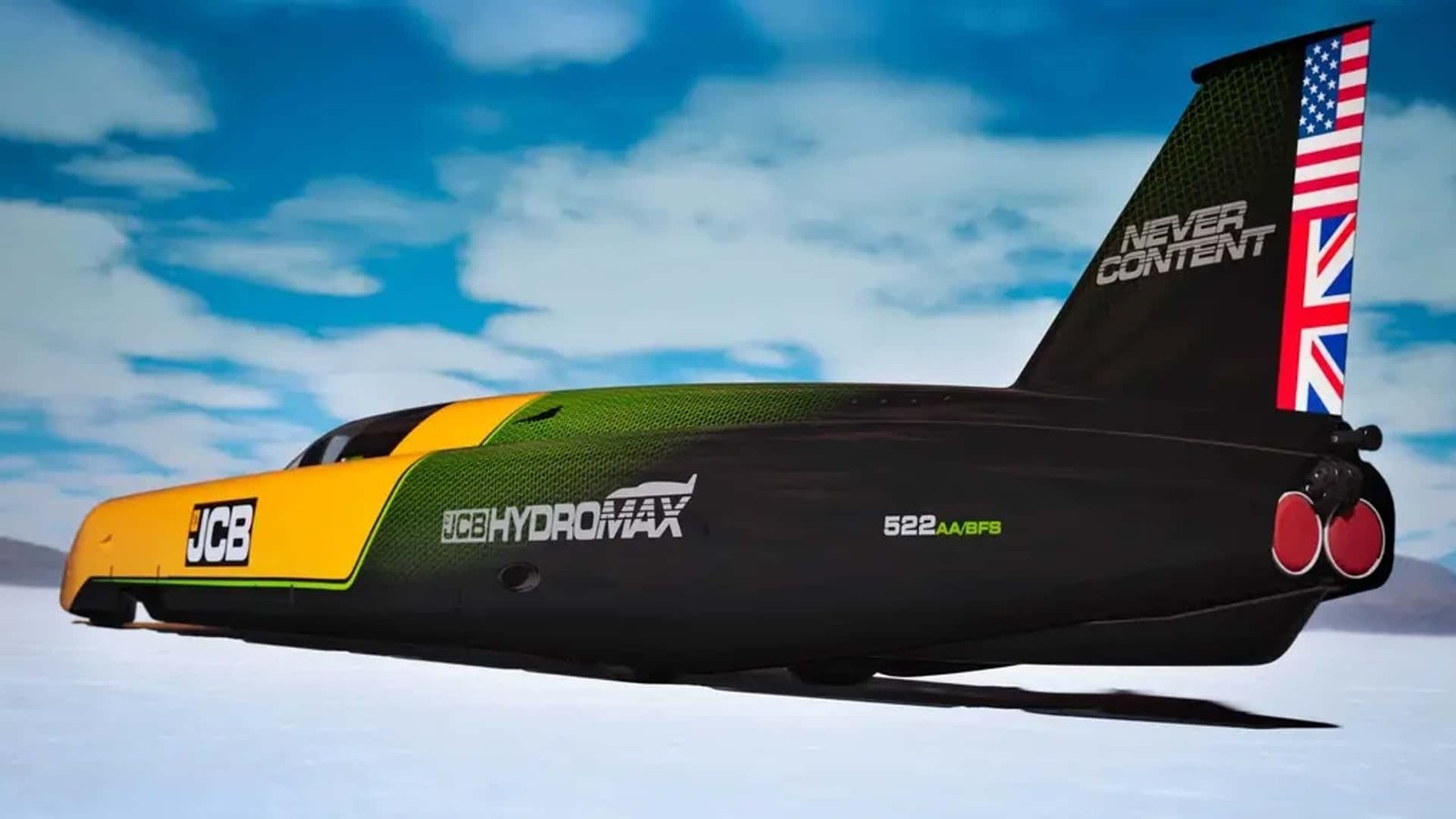
- Hydromax set a class record at Bonneville with a 368.347 mph two-run average.
- It used two hydrogen-burning JCB engines tuned to about 1,600 horsepower.
- JCB will push Hydromax for an FIA-sanctioned world record attempt.
The JCB Hydromax was not supposed to rewrite the Bonneville record books before its world record shot, but that is exactly what happened. The hydrogen-powered streamliner has logged an officially sanctioned Southern California Timing Association (SCTA) class mark at the Bonneville Salt Flats, and it did it with pure combustion—no fuel cells or batteries driving the wheels.
The car’s 368.347 miles per hour average is now the number everyone will quote, but it comes from two razor-close runs and a format that does not forgive mistakes. It also shows what a pair of hydrogen-burning engines can do when tuned hard for speed. The SCTA result gives JCB a verified benchmark before the Fédération Internationale de l’Automobile (FIA) world record attempt that is coming next.
14
Source: JCB
SCTA Record
JCB’s Hydromax streamliner now holds the SCTA Blown Gas Streamliner (AA/BGS, 500-plus cubic inches) class record at Bonneville with an average of 368.347 mph. That number comes from Speed Week’s two-run format, where officials take the average of the peak speeds reached on consecutive days on the same course.
On the first run, Hydromax clocked 367.141 mph. On the return, it upped that to 369.554 mph, producing the 368.347-mph record figure. That new mark clears the previous 348.342-mph benchmark set by the Spectre Streamliner back in 2010, so this is not a marginal gain as it rewrites a class record that stood for well over a decade.
The project has been anything but a one-and-done shot. JCB says the team has already logged 44 runs during development and testing at Bonneville, an unusually deep program by land speed standards. For context, that is far more running than many production-based record cars get before they chase numbers like the top-speed attempts of hypercars such as the Koenigsegg Jesko Absolut.
Hydrogen Engines And The FIA bid
Under the bodywork, Hydromax is driven by two production-based JCB hydrogen internal combustion engines tuned toward a combined 1,600 horsepower. Instead of using hydrogen in a fuel cell to power electric motors, these engines burn hydrogen directly in modified combustion chambers, using adapted fuel and ignition systems but remaining mechanically similar to conventional piston engines.
The SCTA Speed Week rules are key to understanding what the record means. The car has to back up a fast run with another one on the next day, with the average of those two peak speeds becoming the official figure. That format bakes in consistency. If the car overheats, loses traction, or cannot repeat its performance, the record disappears. It is the same kind of repeatable pace production cars need when they chase fastest quarter-mile times or serious top-speed claims.
The SCTA class record is also a deliberate stepping stone. JCB and its partners are now turning the same hydrogen engines all the way up for an FIA-sanctioned land speed record attempt under the global motorsport body’s rules. That will put Hydromax alongside the likes of the Dieselmax predecessor and modern record hunters that go after titles like electric drag records with cars such as the Mustang Cobra Jet 2200 or time-attack records like the Corvette ZR1X at Pikes Peak, but with hydrogen combustion as the headline.
Motor1’s Take: Hydromax proves hydrogen combustion can deliver high, repeatable speeds, giving JCB real-world data for its FIA bid, but the team still has to show it can manage heat, stability, and reliability under tougher FIA rules before anyone treats this as a global benchmark.
Read the full article here