

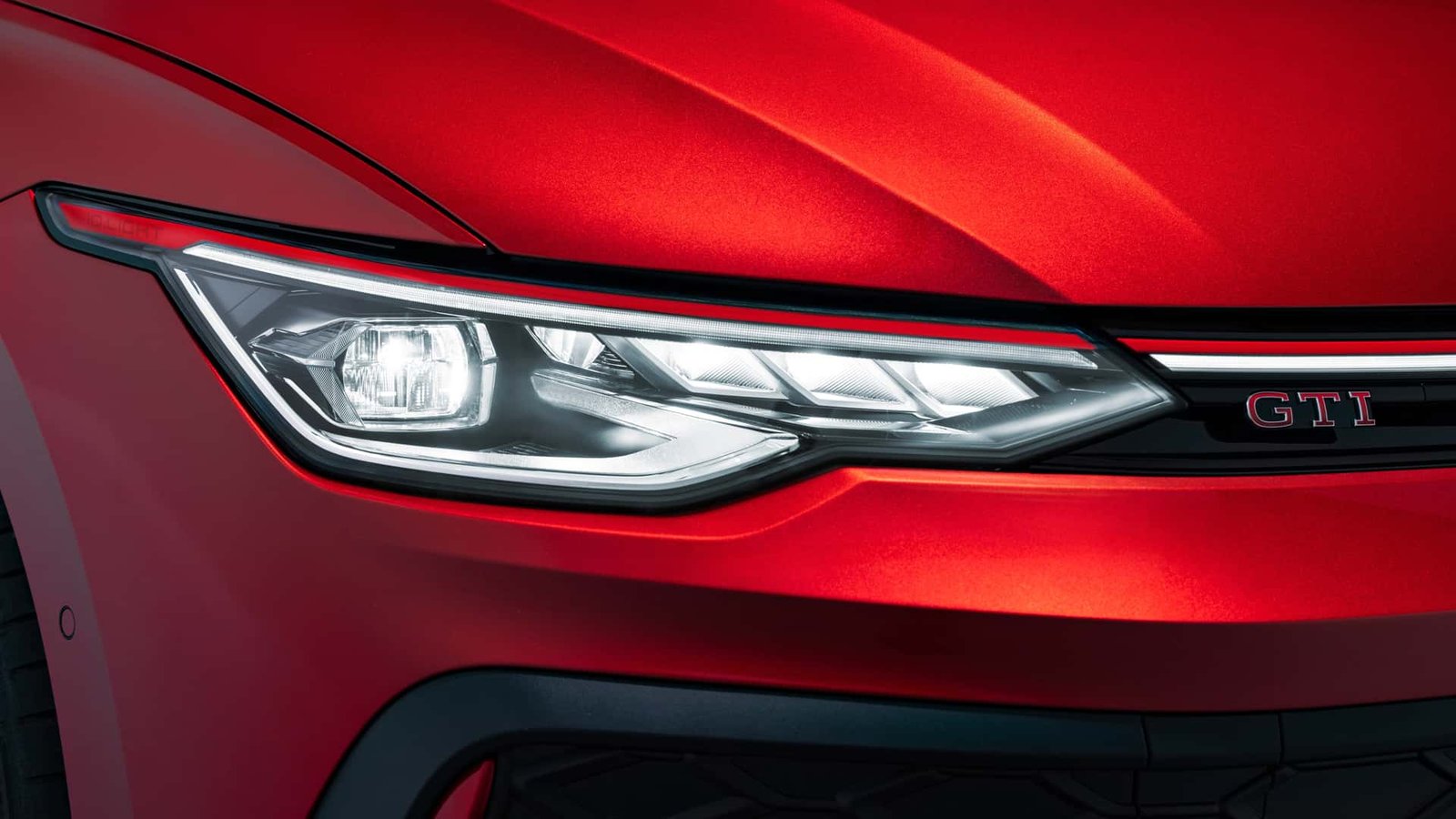
Have you ever wondered why the Golf is the only Volkswagen model, at least in the US, to wear the sporty GTI and R badge? There’s actually a good reason.
In Europe, there have been GTI variants of the Lupo, Polo, Scirocco, and Up. Latin America even got a few GTI models you may not know about—the Gol, Parati, and Pointer. It’s a similar story with R models; the Arteon, Golf Cabrio, Passat, Scirocco, Tiguan, Touareg, and T-Roc all received hotter variants.
In order to find out why, Motor1 spoke to Serban Boldea. Boldea is the Director of Product Planning at Volkswagen of America, and he explained to us why GTI and R badges never expanded in the US:
‘If we bring [a vehicle] to market with this badge and we’re going to stand behind it, then it’s gotta be the real thing. When R is put on a vehicle, it can’t just be some plastic and a sticker.’
Boldea stressed he can’t comment on future products, but promised that the company is working on more fun variants for the US:
‘We are working to make sure that the ‘fun to drive’ is in a Volkswagen. We are looking at where we take the brand with ‘fun to drive’ being an essential element of it.’
Photo by: Volkswagen
Volkswagen recently showed off the ID. Polo GTI in Europe, the first electric vehicle to wear the GTI badge. As with the other GTI models mentioned earlier, it is not slated to be sold in the US. Volkswagen of America is clearly protective of these three letters.
‘If you don’t see a GTI in other vehicles in the US, it’s because the whole concept of a GTI—the lightness, the simplicity, the fun—is more than just a name badge. A GTI comes with a particular seat, red accents, and drivability. It’s beyond the visual. We will only bring a car to market named GTI if we all internally feel that you will drive it and say ‘yep, that’s a GTI.’
During our conversation, Boldea picked out the word ‘insincere’ as an adjective he would never want to hear used to describe a GTI model.
Boldea referenced the Passat GT, a 2018-only model year variant that paired a 3.6-liter VR6 with 280 horsepower with some sportier styling, a dual-clutch transmission, and a slightly tuned suspension. “It’s a hell of a cool car, but it wasn’t the honest complete package of a GTI,” he admitted.

Photo by: Volkswagen
The ID. Polo GTI, in addition to being the wrong size and body style for our market, may suffer another criticism that Boldea levied against EVs, even high-performance models with simulated gears like the Hyundai Ioniq 5 N.
‘Oftentimes, when I bring a competitor home, I get excited to show my wife or daughter. But I get an eye roll. The reality with these manually shifting EVs, they are cool during the test drive and your three close friends, but for your everyday commute, I couldn’t wait to get back to my ID. Buzz.’
Beyond the occasional gimmick, Boldea said he doesn’t see a scenario where simulated gears in an EV become a widely used or available feature.
‘In performance-oriented vehicles like a Golf R or a GTI, you may see those kinds of developments. You may see these kinds of automatic transmissions that mimic a manual. For the majority of the market, the brilliance of the EV is no transmission at all: no gears, no shifting, nothing. Do I think there is a market? Yes I do. But I think it’s going to be a small, ultra-specific enthusiast customer.’
While Volkswagen doesn’t plan to include simulated gears in the ID. Polo GTI, a future Clubsport variant, is expected to add this feature.
Read the full article here