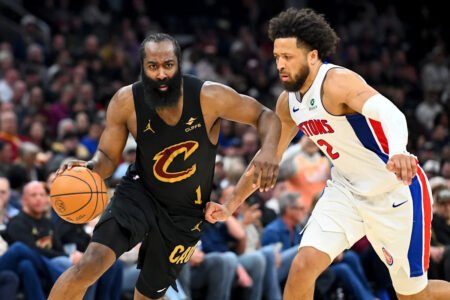



Should we just cancel the rest of the NBA playoffs and declare injuries the winner? They’ve already dominated this postseason far more than a team possibly could. The Oklahoma City Thunder are playing without their second-best player, Jalen Williams, after what feels like his 10th hamstring injury. In the series against the Denver Nuggets, the Minnesota Timberwolves’ Donte DiVincenzo tore his achilles, and Anthony Edwards gruesomely hyperextended his knee. Wolves’ backup Ayo Dosunmu put up a heroic 43 points in Game 4, then returned to the bench two games later to nurse an injured calf. The Nuggets lost Aaron Gordon to a calf strain midway through the series and played entirely without Peyton Watson, who was sidelined by a hamstring strain.
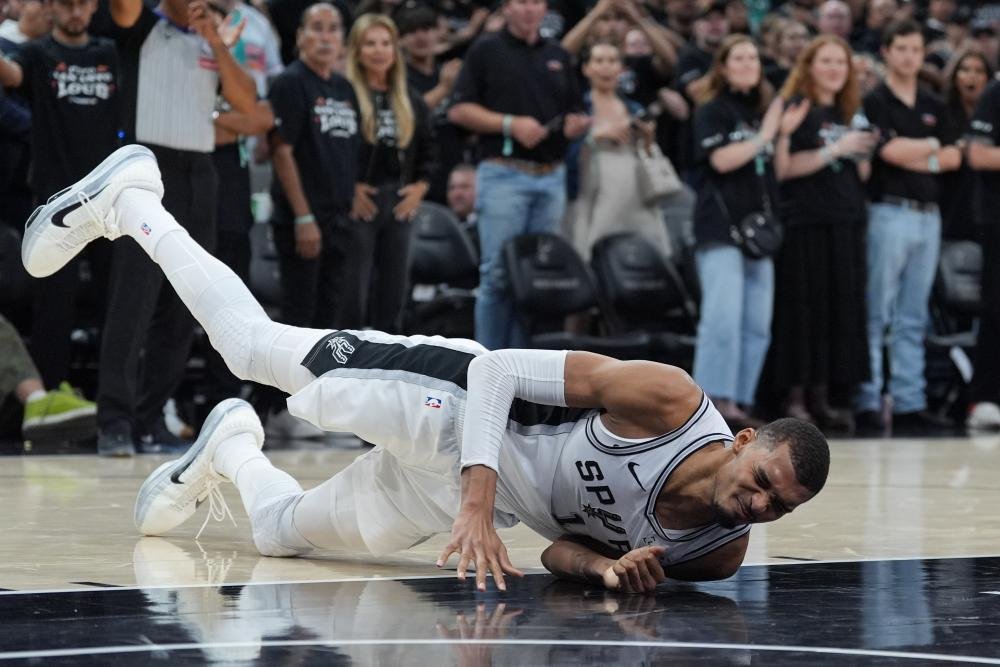
Jayson Tatum’s record-quick comeback from an achilles tear was the feelgood story of the season, at least until he hurt his leg, which ruled him out of a vital Game 7 that his Boston Celtics lost to the Philadelphia 76ers. The Los Angeles Lakers’ starting rotation lacks Luka Dončić until further notice and played four of six games against the Houston Rockets without another of their stars, Austin Reaves. The Rockets’ Kevin Durant played 78 of 82 regular season games, then missed every game of the Lakers series but one thanks to a bad knee and a bone bruise in his ankle. We of course had to save the most ridiculous injury for last: Victor Wembanyama was knocked out by the court itself after tripping on a drive and whacking his jaw on the hardwood. (He missed all of one game and wishes he could have missed zero.) Perhaps it was an omen.
Advertisement
Related: Embiid urges 76ers fans not to sell playoff tickets to Knicks fans: ‘If you need money, I’ve got you’
This is how the NBA is now. Ten hyper-athletic men powered by modern training regimens share a 94-by-50-foot rectangle, sprinting back and forth and leaping into the air and often crashing into each other as they do. An unconscionably long 82-game regular season sands down the players’ durability. Mix in the extra dose of vigor and roughness that comes with the heightened stakes of the playoffs, and bodies break down. Injuries that affect the outcome of games and series, that make you want to turn off the TV, are a constant risk.
This isn’t to say that this postseason has lacked drama or dopamine. Among the relatively uninjured, somehow, is none other than 41-year-old LeBron James, who continues to find escape routes from the bounds of time. The Sixers pulled off a miraculous comeback from 3-1 down to eliminate the Celtics, the Pistons did the same against the Magic. The Toronto Raptors’ RJ Barrett hit a game-winning three-pointer that kicked high, high off the back of the rim and through the hoop. (I immediately thought of Tyrese Haliburton’s shot against the Knicks last year, the most indelible memory from one of the best runs of clutch plays in history – before Haliburton tore his achilles in the next series.) The shorthanded Wolves banded together to topple the Nuggets; I wanted their scrappy crew to win so badly that it hurt a little bit. But all this brilliance can’t be worth the trail of broken bodies left in the wake. These playoffs feel like a stay-healthy contest rather than a way to determine the best team in the league, which hurts the viewing experience. Far worse is the intensifying feeling that professional basketball itself is incompatible with health.
There are sports, like boxing, in which physical damage is inextricable from the appeal. Basketball is different, or should be. The attraction is in the manipulation of space required to splash a three-pointer, in the precision and explosiveness that goes into a chase-down block. One player bodying another via dunk or block is satisfying, but we don’t want the other player to be hurt. Moses Moody caving his knee in while jumping for a dunk is not supposed to be part of the experience, nor is the epidemic of achilles and calf injuries. Fans should not be wincing every time their favorite player clatters to the ground and is slow to get up, which seems to happen a dozen times per game. No superstar escaped this season unscathed: Shai Gilgeous-Alexander had the luxury of not playing many fourth quarters thanks to his team usually putting the game away by then, but still missed time in February because of an abdominal strain. Nikola Jokić hyperextended his knee, after which his searing form from early in the season failed to fully return. Cade Cunningham suffered a collapsed lung in March. Dončić’s hamstring betrayed him in the middle of one of the hottest runs of form of his career. The latter two MVP candidates had to seek exemptions for the league’s 65-game rule to be considered for the honor.
Advertisement
That we’re only one round into the playoffs feels impossible. After his team finished off the Nuggets, Wolves coach Chris Finch looked tired rather than triumphant: the younger, healthier San Antonio Spurs were already waiting in the conference semi-finals.
“Before the series started, I figured the real winner of this series was gonna be San Antonio, because both these teams were gonna take a lot of pieces out of each other, and they did,” Finch said. “So I’m not sure what we have left standing before we go down there.” It’s easy to envision the Spurs essentially winning by TKO over what remains of the Wolves, or the Thunder forcing James into debilitating exhaustion midway through their series.
There’s a lot to be excited about for the rest of the playoffs, a likely Spurs-Thunder showdown in the Western Conference finals at the top of the list. Still, it’s hard to be too jazzed when more injuries are almost certain to join the pile. Last year’s NBA finals, brilliant through six games, will forever be blemished by Haliburton’s achilles tear early in Game 7. In the 2024 finals, Dončić, the best player on the floor, was clearly carrying an injury. We can hope that injuries won’t insert themselves into this year’s finals, but recent history suggests mercy is unlikely.
Practically everybody agrees that the season needs to shorten, perhaps by a lot. Maybe the games do, too. Reverting first-round playoff series to best-of-five, as was the case before 2003, could keep players healthy a little bit longer. Maybe a seven-game series is too much punishment on a human body under any circumstances. For as long as the NBA resists change, its players will pay the price.
Advertisement
After the Lakers mercifully ended the Rockets’ bizarre, injury-marred season on Friday, the agony of defeat appeared tempered by exhaustion. The camaraderie between the players was also striking. Durant, who has had a tough season, hugged James tightly. He giggled with Dončić on the sidelines. Fred VanVleet, the Rockets’ vital point guard who sat out the whole season with a torn ACL, mingled with the players. It looked like everybody had finally been relieved of the burden of the game: the faces atop those beaten bodies, at last, smiling.
Read the full article here