


Miami has hosted 11 Super Bowls. It will be a while until South Florida makes it to a dozen.
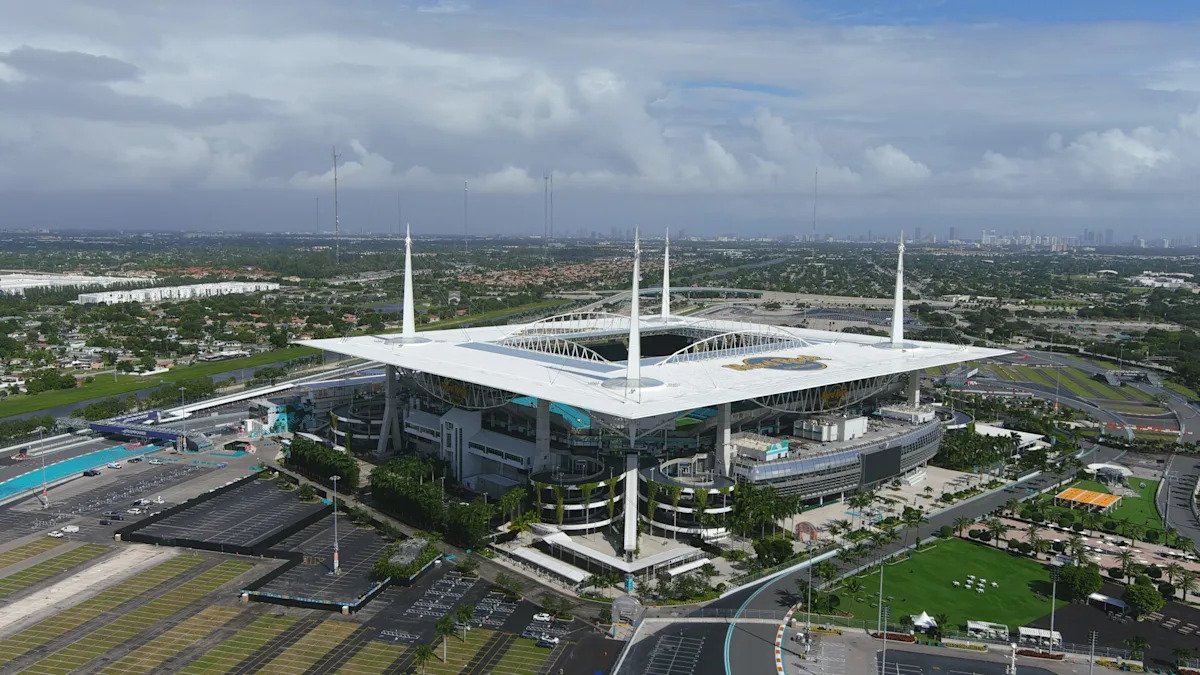
Owner Stephen Ross said this week that Hard Rock Stadium no longer meets the NFL’s requirements for hosting a Super Bowl.
Advertisement
It’s not about the stadium itself, but the area around it, which has changed to accommodate the annual Miami Open and F1 events.
“The one thing that suffered is Miami hasn’t gotten a Super Bowl here, and we normally have one every five years,” Ross said, in comments initially reported by Brian Brandell of South Florida Business Journal (via Mike Oliva of DolphinsTalk.com). “Miami is not really in line for one. It’s always exciting to have the Super Bowl but that was before we had all the other events. Miami has by far the best weather. It’s in their best interest to have one here but at this point they don’t believe we meet all the requirements and the demands.”
Ross hasn’t completely given up on the possibility of bringing the Super Bowl back to Miami for the first time since 2020.
“We are looking at how to make improvements,” Ross said. “I want to make the stadium always feel like a new stadium, we are looking at what the next phase will be and making the fan experience that much better.”
Advertisement
The most recent title game in South Florida — Super Bowl LIV between the Chiefs and 49ers — came after a 10-year break resulting from the need to make significant upgrades to the building itself, including a giant roof to protect fans from the rain that persisted throughout Super Bowl XLI, between the Colts and Bears. Ross tried to finagle public financing for the upgrades before realizing that wouldn’t be happening and paying for them himself.
Ross’s son-in-law, Daniel Sillman, has become more and more involved in running the team as the eventual successor to Ross. Sillman told Brandell that the team believes there’s a solution to satisfying the league’s expectations.
Regardless, Miami won’t be getting a Super Bowl in the foreseeable future. The next three have been awarded to Los Angeles (2027), Atlanta (2028), and Las Vegas (2029). Nashville will open a new stadium, and it will get one as part of the taxpayer money quid pro quo that applies to most new venues. And the league will keep going back to L.A. and Las Vegas on a regular basis.
The deeper message is that, as more and more newer and better stadiums are built in cities suited to host the game, the more pressure will be applied to all cities to fork over the funding needed to ensure that the best facilities will get the biggest game.
Hopefully that will happen in Miami. It should host the game every five years. For now, the record gap of 10 years is destined to be broken, with no end to it currently in sight.
Read the full article here