


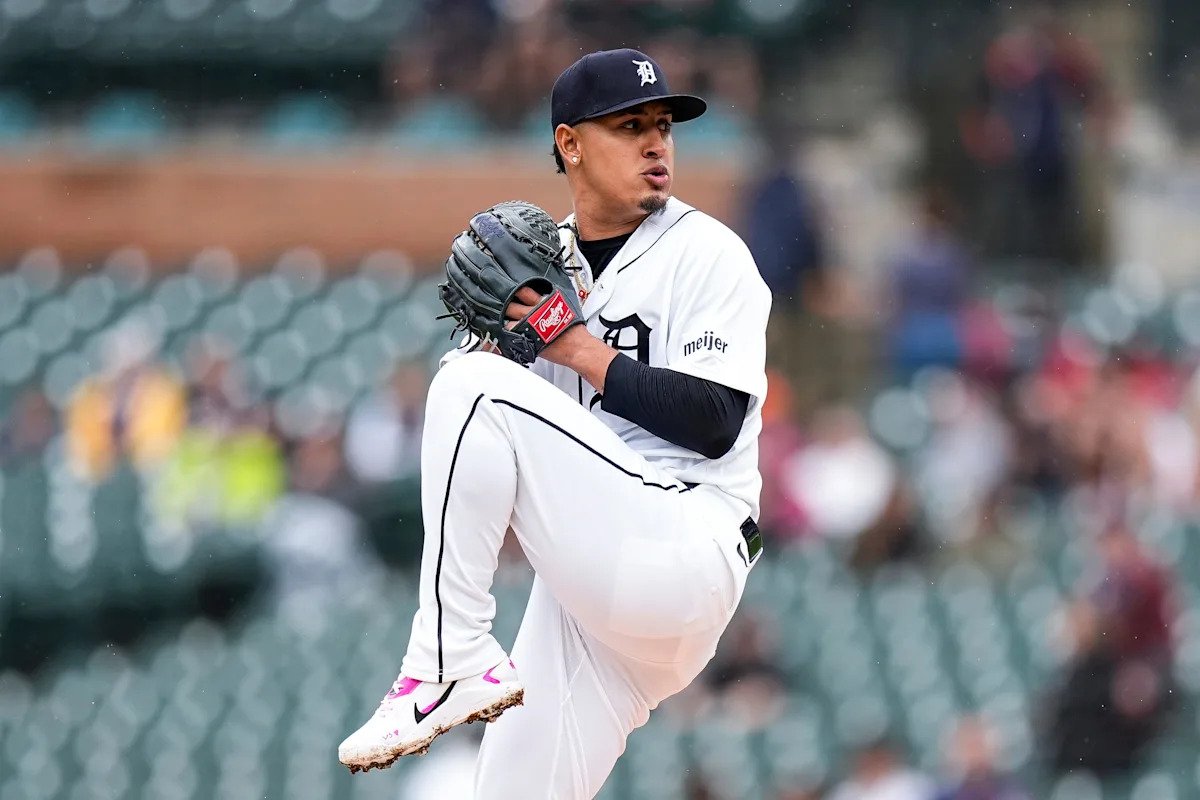
Once again this spring, 25-year-old Keider Montero found himself on the outside of the Detroit Tigers starting rotation. Justin Verlander’s hip injury opened up an opportunity, and so far Montero is running with it to a degree we haven’t seen from him in his two-year major league career. Three starts isn’t enough to say anything has truly changed for him, but there are a few interesting developments to keep an eye on as he seems in line to get at least 2 or 3 more starts before Verlander might be ready to return.
The result have certainly been good. Through 18 1/3 innings and three starts, which is really nice volume of innings in the first place, Montero holds a 3.31 ERA with a 1.66 FIP to back it up. The first key to that success is Montero’s walk rate. The right-hander has walked just 3.2 percent of hitters faced. He always throwns a really good volume of first pitch strikes, which certainly helps, and he’s doing so again this season at 65.1 percent first pitch strikes. That’s pretty standard for Montero but it does put him in a good position to succeed rather than falling behind hitters. League average first pitch strike rate is 60.5 percent. Montero is throwing three percent more strikes than last year overall, and so far he’s done so without getting hit hard. He’s yet to allow a home run. That will change, but it’s still a positive step that he’s been able to attack the zone a little more without retribution from hitters.
Advertisement
If there’s a reason he’s throwing more strikes beyond simply repeating his delivery better and rebounding after a poor sequence, all marks of a maturing starting pitcher, it’s that he’s throwing more fastballs overall. Obviously, for most pitchers fastballs are the easiest pitches to spot around the strike zone. Montero has so far used 33.2 percent fourseam fastballs and 25.7 percent sinkers. Overall that’s about 8 percent more fastballs than he was throwing last season and his velocity is up almost a half a mile per hour on average, despite the cooler weather he’s dealt with overall by making all three starts at home in Comerica Park.
There’s nothing significantly different about either fastball type this season. As we saw in the spring, Montero can reach back for 97 and even 98 here and there when he wants it, but he’s largely stayed within himself, spotted fastballs well and avoided damage. That’s a good recipe for success in terms of avoiding walks and being efficient, but without a true plus or better heater, it can also lead to more home runs allowed.
We’ll have to see if this is more than early season strategy. In a bigger park in generally cool spring weather, it’s harder to hit the ball out of the park and Montero has taken advantage by attacking the zone and forcing opposing hitters to swing the bat. So far they haven’t been able to make him pay for that approach, but that could change as the weather warms up. It’s a fairly standard cold weather strategy as gripping breaking balls and changeups is trickier in cool conditions. Hitters may eventually get to the fastball, but it’s just as likely that Chris Fetter will adjust Montero’s pitch mix as the weather improves. So early in the year, all these things are moving targets and it’s hard to take too much from usage changes so soon. It’s likely this is just taking advantage of the weather to attack with a little more impunity that Montero will have when it’s 85 degrees this summer.
One more notable change to his pitch mix early on is throwing less sliders and more changeups. He threw 22 percent sliders in 2025, and only 11.1 percent sliders so far this season. He gave up 7 homers and a .667 slug against the slide piece last season, so it certainly makes sense to use it less, particularly as he still has his knuckle curve to work with. Montero really doesn’t get that many whiffs, particularly to the degree stuff metrics might suggest on the breaking stuff. His strikeout rate is up from 18.5 percent last year, including relief appearances, to 23.5 percent early on. He’s not getting more swing and miss, but he is pounding the edges a little more effective with his two fastball types, while throwing a more even mix of sliders, knuckle curves, and changeups. His ability to lean into the fastballs more and cut usage of the breaking stuff has made both breaking balls more effective so far. We’ll have to see if that lasts if the fourseamer and sinker start to get hit harder.
Advertisement
Overall, there are no signs of a major breakout here. There’s no new pitch, or a tweak to an existing breaking ball that has turned it into a better pitch, or a big velocity bump. Command improvements take more time to buy into. He’s just getting more out of his stuff and showing more confidence in the two fastball types, and the fact that while neither gets a lot of whiffs, neither has been hit all that hard in his major league career either. The hope would be that with the fourseam and sinker better established and Montero throwing more strikes overall, hitters reading that scouting report may start swinging more aggressively, knowing that he’s going to attack with fastballs. Once you put that in their heads, the secondary stuff may be more effective overall, but especially in terms of drawing whiffs against hitters expecting more fastballs.
It’s always a cat and mouse game, and pitching coaches Chris Fetter and Robin Lund, along with catchers Dillon Dingler and Jake Rogers, play it well. But unfortunately there’s no sign of a real improvement in any individual pitch, other than simply more consistency. That may be enough to make Montero a more legitimate mid-rotation level starting pitcher. But it will take a lot more starts to prove out whether these are signs of a pitcher in better command of his game, or just a pitcher taking advantage of April weather to attack more, knowing that it’s harder for hitters to do damage in chilly early spring conditions.
Read the full article here