


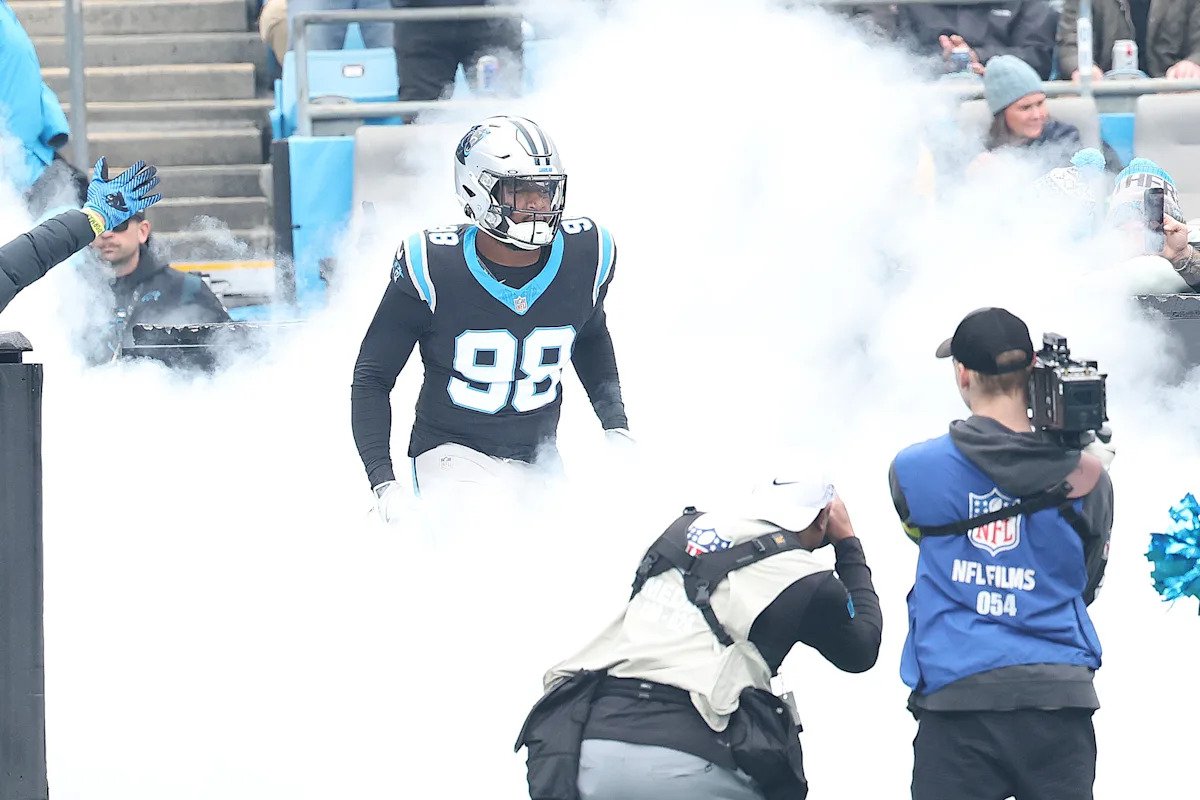
Every year, NFL media tries to warn fans not to overreact to initial contract terms, and every year, there’s at least one contract that explains why we give that warning.
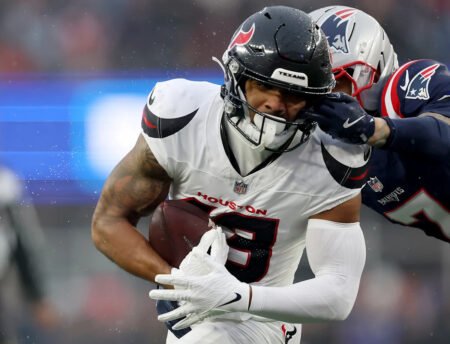
This year for Detroit Lions fans, it’s DJ Wonnum’s deal. Initially, it was reported as a one-year deal worth up to $6 million. In reality, it’s basically half of that.
Advertisement
Let’s break down Wonnum’s contract details, how it compares to other players at his position, and what it means for the Lions moving forward.
DJ Wonnum contract: 1 year, $3 million ($2.27M guaranteed)
Contract terms via Over The Cap
-
Base salary: $1.37 million (fully guaranteed)
-
Per game bonuses: up to $680,000 ($640,000 counts against cap)
-
TOTAL CAP HIT: $2,960,000
-
Dead cap if cut: $2,270,000
Overall, this a relatively modest contract for Wonnum, and certainly lower than the initially reported terms of “up to $6 million” which inflates the actual terms of the deal by double. However, that does suggest there are a ton of performance incentives built into the contract that won’t affect this year’s salary cap, but if earned will be added to 2027’s cap. Those details haven’t been made public yet, but they typically include things like sacks, team performance, etc.
Advertisement
As of now, Wonnum’s contract ranks just 74th out of 212 edge contracts in terms of per year value. While he’s likely to play a different role on defense than Al-Quadin Muhammad (Wonnum projects to be an early down player, while Muhammad was more of a third-down specialist), it’s still worth comparing the two contracts.
Muhammad contract — one year, $4 million ($2.5 million guaranteed)
-
Base salary: $1.8 million ($500,000 guaranteed)
-
Per game bonuses: Up to $200,000
-
Performance bonuses: $1.25 million
-
TOTAL CAP HIT: $5,250,000
On the surface, it looks like Muhammad’s contract is significantly more than Wonnum, and in terms of 2026 cap hit, it is. But the key is the performance bonuses on both contracts. Because Muhammad is coming off an 11-sack season, his performance bonuses appear to be considered “Likely To Be Earned,” which means they count against this year’s cap. For example, if one of Muhammad’s bonuses is earned if he hits 10 sacks for the season, that’s “Likely to be Earned” because he made it there last season. If Wonnum has the exact same bonus in his contract, it is considered “Not Likely to be Earned” because he only had three sacks last year. “Not Likely to be Earned” incentives don’t count against the salary cap initially, but if the player achieves the goal, it’s added to the next year’s salary cap.
Take away the performance bonuses, and it’s a one-year, $3 million deal for Wonnum vs. a one-year, $4 million deal for Muhammad.
Advertisement
But in all honesty, Wonnum’s contract should be compared to the player he’s likely replacing: Marcus Davenport. Given the amount of playing time and the specific roles they play will overlap considerably, it’s worth noting that Detroit made a slightly higher investment in that position than they last year. Davenport, coming off another injury-riddled season, was given a one-year, $2.5 million deal in 2025 after signing a one-year, $6.5 million deal the year prior. Wonnum’s $3 million deal with another $3 million in potential incentives represents a slight increase.
It’s still a pretty low investment in a position that many were hoping for a splash move, but with Muhammad’s role still yet to be replaced on the roster, perhaps Detroit isn’t done adding to the edge position. And there’s always next month’s NFL Draft.
Read the full article here