

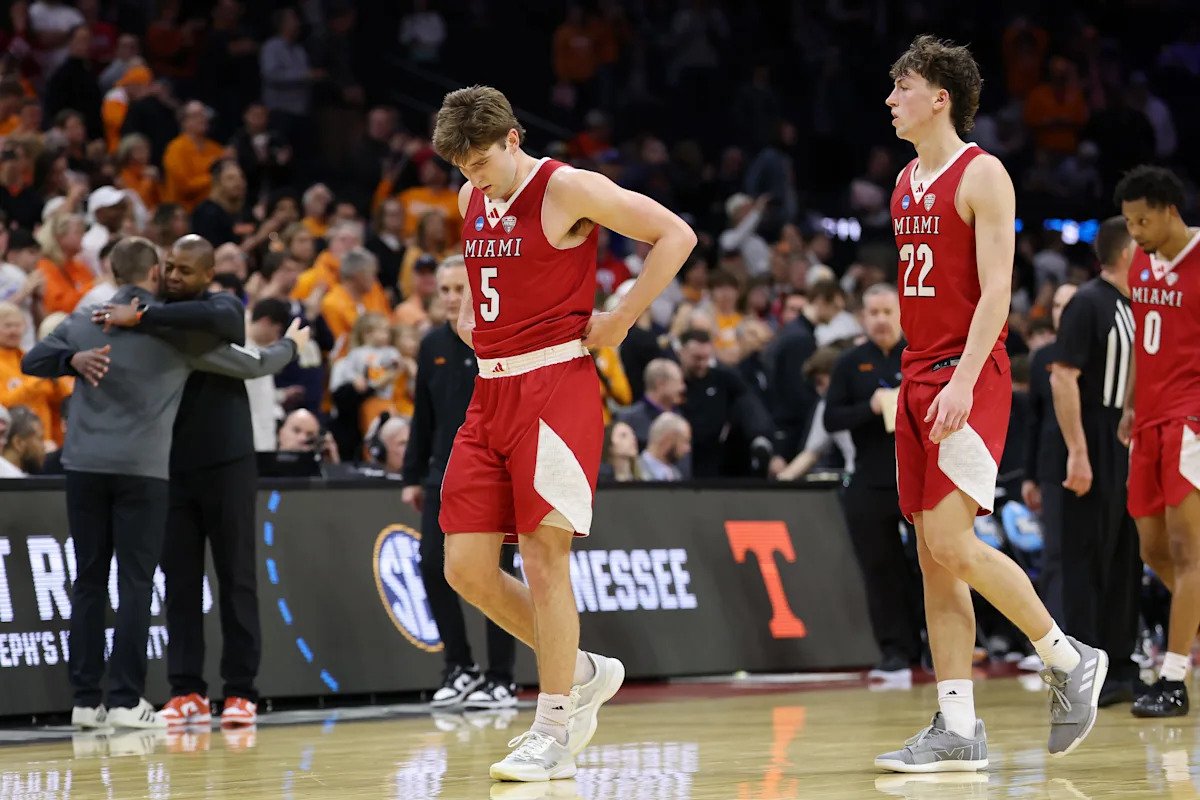
For the better part of the past month, the most hyper-analyzed and breathlessly discussed team in men’s college basketball wasn’t in Lexington, Kentucky or Lawrence, Kansas or on North Carolina’s famed Tobacco Road.
It was a mid-sized state school in southwest Ohio that wasn’t even picked in the preseason to win its own (typically) one-bid conference and had gone nearly 20 years without an NCAA Tournament appearance.
Advertisement
When the 2025-26 season tipped off back in early November, few people outside of Oxford, Ohio could have imagined Miami (Ohio) would become one of the defining teams and storylines nationally by the time March Madness rolled around, yet there the RedHawks were, winning game after game and doing what only some of the most iconic squads in the sport’s modern history had been able to pull off.
March Madness scores: See the big shots, moments, highlights in today’s first round
That inspired run ended Friday, March 20, with Miami suffering just its second loss of the season, a 78-56 blowout at the hands of Tennessee in the first round of the NCAA Tournament in Philadelphia.
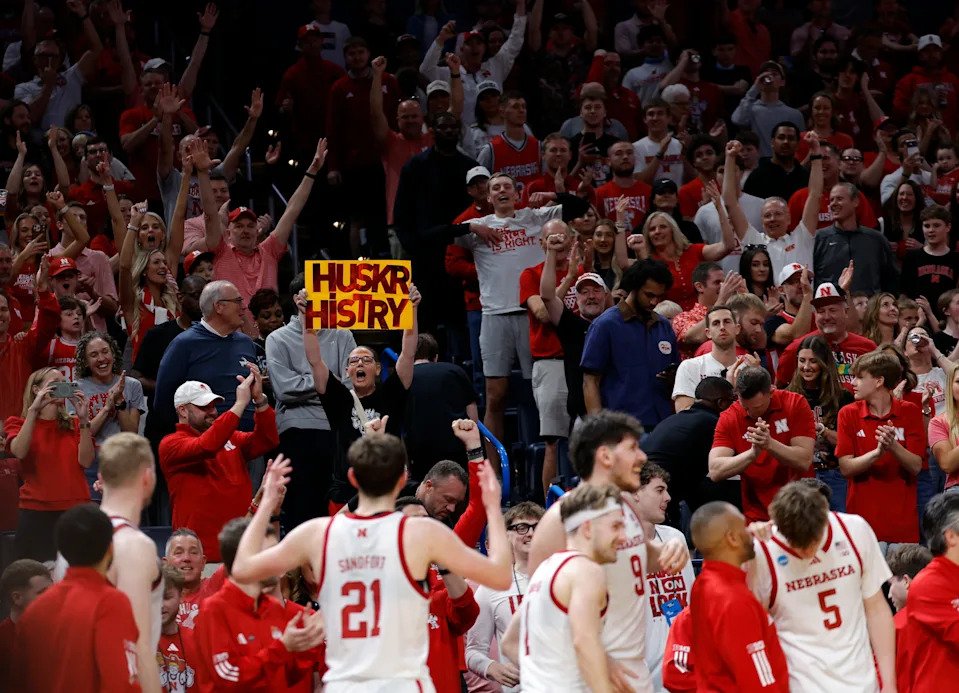
What happened across an ill-fated 40 minutes, though, did nothing to diminish the five months that preceded it.
Advertisement
The RedHawks became just the fifth Division I team since 1980 to start a season 30-0, joining the star-studded likes of 1990-91 UNLV and 2014-15 Kentucky. The fact those historical peers had significantly more next-level talent only added to Miami’s charm. A roster made up largely of once-overlooked recruits came together to play one of the more beautiful forms of basketball of any team in the country, an offensively explosive outfit that played at a frenetic pace, spread opponents out and knocked down shots at a dizzying rate.
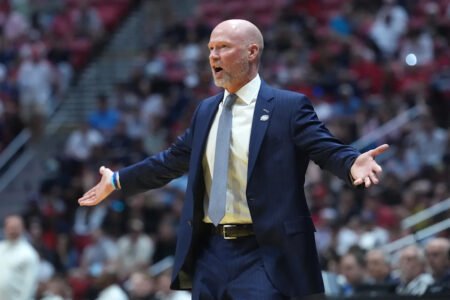
In an age when mid- and low-major programs largely exist as feeder systems for college basketball’s biggest and richest schools, the RedHawks were a heat-warming anachronism, a group of players who came into the program, developed, improved and, perhaps most impressively, stayed. Of the 15 players who logged at least one minute for Miami this season, 12 began their careers at the school. Five of the top six scorers from a 25-win team the previous season came back, almost certainly spurning more lucrative opportunities elsewhere. And it was all coming under the direction of a coach in Travis Steele who, after stumbling as a head coach at the power-conference level, has made the most of a second chance.
At some point, an inspiring story became something decidedly more polarizing.
As the RedHawks inched closer to an unblemished regular season, debates began over their NCAA Tournament hopes. Their poorly rated nonconference schedule and subpar predictive metrics were nitpicked. Their series of tight wins drew skepticism. If they lost even just once and didn’t earn the Mid-American Conference’s automatic bid to the Big Dance, did they deserve a spot in the 68-team bracket? To some extraordinarily outspoken individuals, the answer was a firm “no.”
Advertisement
Despite Bruce Pearl’s best and most nakedly shameless efforts, and even after a loss to UMass in the MAC quarterfinals, Miami heard its name called on Selection Sunday, earning one of the final at-large spots and a trip to the First Four in Dayton that may as well have been a challenge from the NCAA tournament selection committee — if you really belong in this event, you’ll have the chance to prove it.
And, surely enough, they did.
Steele’s men of steel drained 16 3-pointers and knocked down 39% of their shots from beyond the arc to beat a high-scoring SMU team by double digits and pick up the program’s first NCAA tournament win since a Wally Szczerbiak-led run to the Sweet 16 in 1999.
“I think we do belong here,” Peter Suder, the team’s leading scorer, said Thursday heading into the first-round game. “I think we showed that last night especially, but just don’t count us out.”
Advertisement
Two days later, they ran into a wall, taking on a bigger, more physical and more talented Tennessee squad that was as bad of a matchup on the court as it was on paper, outrebounding Miami by a 42-25 margin, limiting its effectiveness from 3 and holding it to a season-low 56 points.
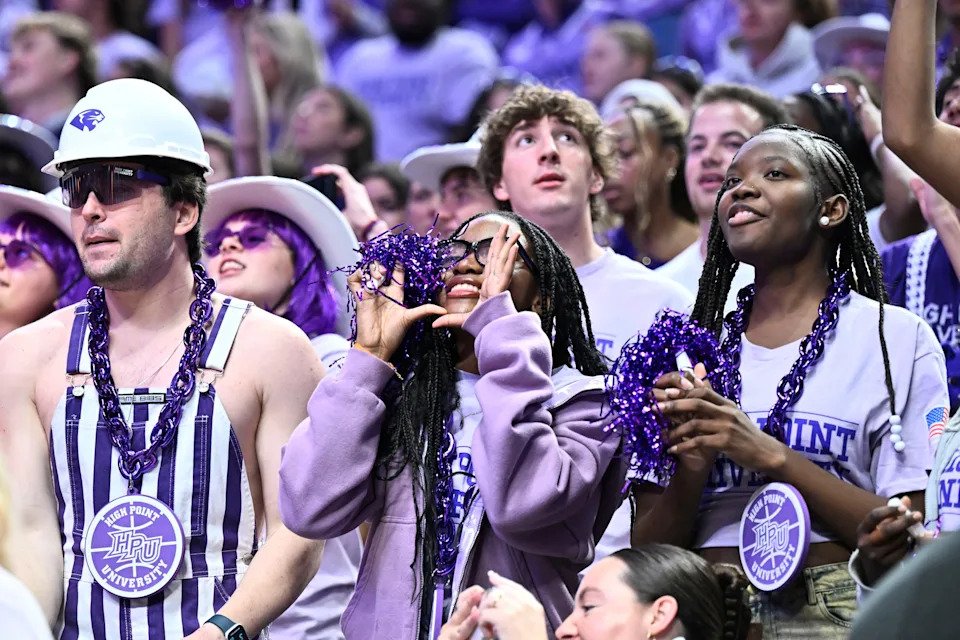
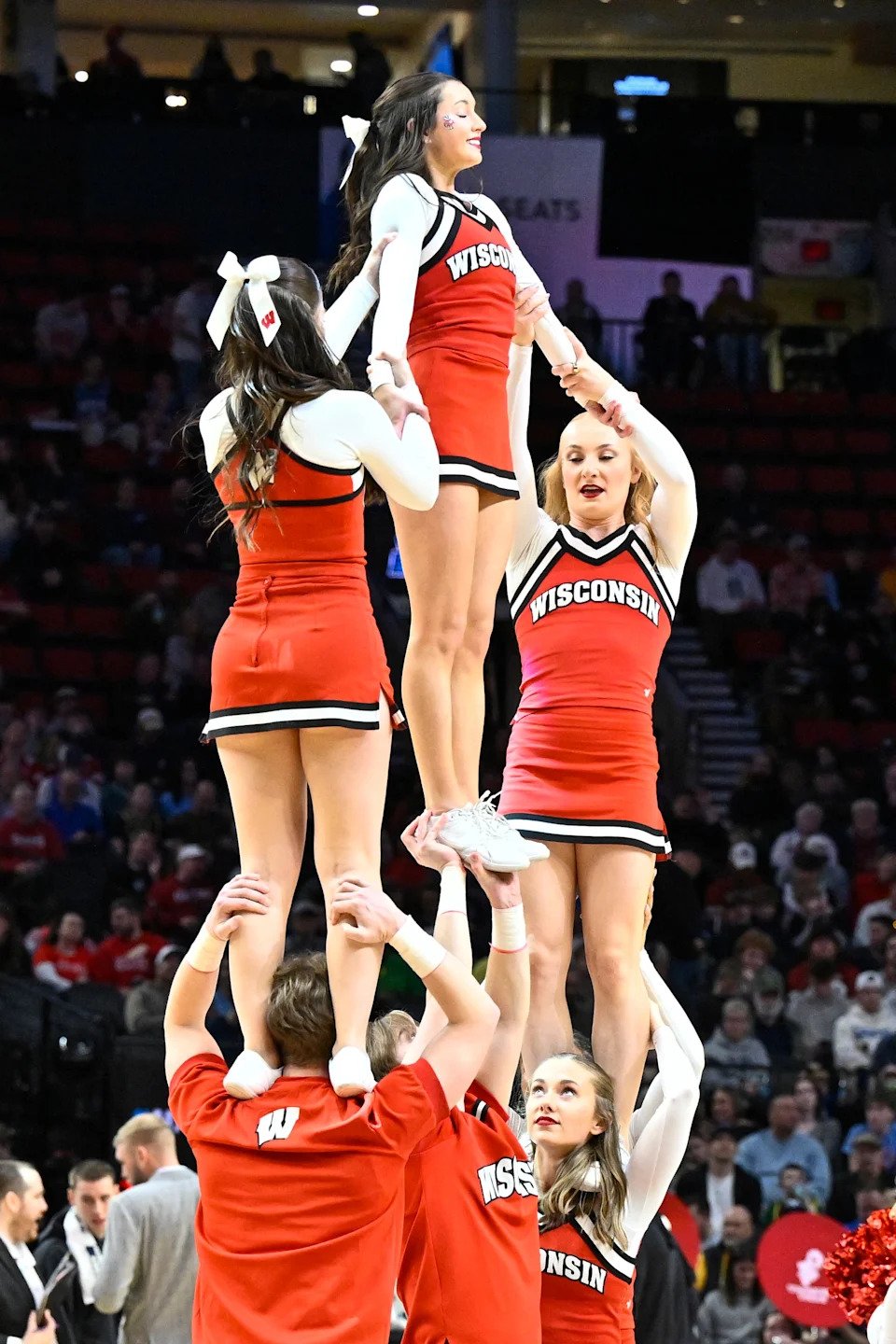
For all but one team, the college basketball season ends in disappointment, but for some, success isn’t wholly defined by national championship or Final Four banners. For months, as Miami’s resume was relentlessly dissected, the RedHawks (and results of Freedom of Information Act requests) insisted that teams from the sport’s major conferences were unwilling to schedule them. They weren’t alone in that struggle. High Point, as coach Flynn Clayman made sure to note after his team upset No. 5 seed Wisconsin on Thursday, faced similar issues.
All that schools like them asked for was a chance in a sport that increasingly seems like it’s stacked against them and designed to kill stories like theirs before they even get the chance to begin. But in the NCAA Tournament, when there’s no hiding behind a cautious scheduling philosophy, those chasms between the haves and have-nots have a beautiful way of disappearing.
While Miami came up well short against Tennessee, it showed that it earned the right to be there. And, as its coach sees it, its hard-earned place in the sport has staying power.
Advertisement
“My goal is to get this thing to the second weekend of the NCAA tournament,” Steele said after Friday’s loss. “We will be back. I’m very very confident on that”
This article originally appeared on USA TODAY: Miami Ohio basketball’s season is over, but it won’t be forgotten
Read the full article here