

ORLANDO, Fla. — As the final round approaches at The Arnie, there is always a sense of anticipation about what Sunday might bring.
Bay Hill has a way of creating drama.
The wind picks up. The rough grows meaner. The closing holes ask uncomfortable questions of whoever is holding the lead.
Advertisement
Sometimes the answers are spectacular.
Other times, the pressure produces something else entirely:
A collapse. A meltdown. Dare we say, a choke.
Golf fans have seen enough of those over the years to know how they unfold. One swing that finds water. One nervous putt that slides past. A lead that suddenly disappears.
And yet, for all the sympathy we feel for the player enduring it, collapses carry a strange, morbid magnetism.
They are painful to watch, but they impossible NOT to watch. That unsettling reality was on display just last week at the Cognizant Classic in Palm Beach Gardens.
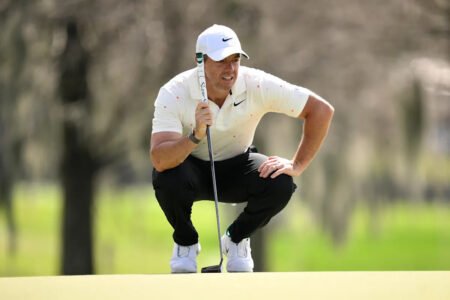
Shane Lowry appeared headed toward victory with a three-shot lead and three holes remaining. The tournament seemed finished. Then suddenly it wasn’t.
Advertisement
Two tee shots splish-splashed into the water. Two double bogeys followed. Within minutes the lead vanished and Lowry’s victory hopes slipped away as Nico Echavarría seized the opportunity and won the tournament.
The golf world watched the final stretch with that familiar mixture of tension and dread. Sadly, everyone could see what was happening, but no one could stop it.
Lowry’s reaction afterward reminded everyone that these moments are far more personal than the scoreboard suggests.
“The hardest thing about today is I’ve never won in front of my 4-year-old, and she was there waiting for me,” he said, answering questions in the aftermath of the meltdown like a true professional. “I only wanted it for her today. I don’t care about anything else.”
Advertisement
Then he described what he had pictured in his mind all afternoon.
“I wanted it so bad … just to see her little ginger hair running down the 18th green would have been the most special thing in the world.”
Instead, the walk off the course felt very different. He knew he had choked. At one point he even tried to explain the strange feeling that took over his swing late in the round.
“I just couldn’t feel the clubface the last three holes. It was strange,” he said.
Anyone who has played golf understands exactly what he meant. Sometimes the game simply abandons you. Even Arnie himself could attest to it, evidenced by his historic meltdown at the 1966 U.S. Open, when he lost a seven-stroke lead in the final nine holes and watched Billy Casper win the tournament.
Advertisement
Last year’s Arnold Palmer Invitational offered its own reminder of how quickly fortunes can change on Sunday. Collin Morikawa looked poised to capture the title before the final round slipped away. While Morikawa, who had a three-shot lead with five holes to play, spun his wheels; Russell Henley produced a dramatic late charge to steal the tournament.
It was thrilling theater for fans. But for the player on the wrong side of the scoreboard, those moments can linger long after the galleries leave.
That’s the cruel beauty of golf. There is nowhere to hide when momentum shifts. Just you, the course, and the mounting realization that things are slipping away.
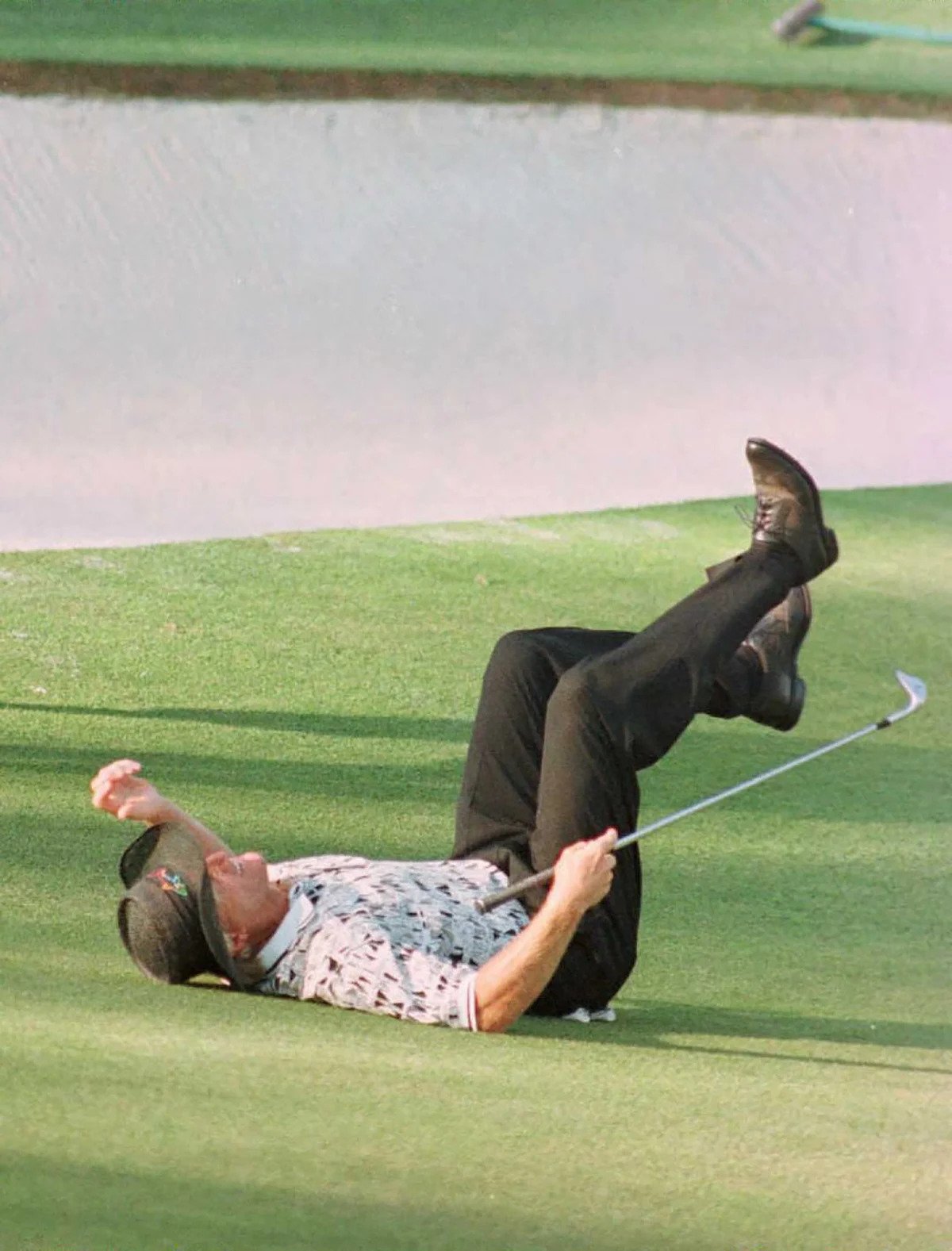
Which brings me back to three decades ago. This spring marks the 30th anniversary of perhaps the most famous flameout golf has ever seen at the 1996 Masters.I was there at Augusta National Golf Club that Sunday afternoon watching Greg Norman try to win his first Masters.
Advertisement
Norman began the final round with a six-shot lead. He was the No. 1 player in the world and seemingly on his way to finally slipping on the green jacket that had eluded him.
Instead, he shot 78 while playing partner Nick Faldo played steady, patient golf and walked away with the victory.
But the numbers alone don’t capture what it felt like to watch that round unfold. It was cringeworthy. It was gut-wrenching. It felt foreboding and fascinating at the same time. Each Norman mistake made the silence around Augusta a little heavier. Each bogey seemed to tighten the tension even more.
And, yet, no one could look away. It felt like watching a disaster unfold in slow motion.
Advertisement
Golf had exposed one of the greatest players in the world in the harshest possible way. That’s the strange paradox of collapses in sports. We celebrate greatness. But the moments that sometimes stick with us longest are the ones when greatness slips away.
Norman in 1996.
Jean van de Velde at Carnoustie in 1999.
Jordan Spieth at Augusta in 2016.
Each one unfolded with that same uncomfortable rhythm. And each one kept fans glued to the moment even as they felt sympathy for the player enduring it.
So as the leaders head into the final round at Bay Hill, let’s hope for something better on this Sunday. Let’s hope for heroics over heartbreak. Let’s hope for a champion rising to the moment rather than falling to the pressure.
Advertisement
Yes, collapses will always be part of golf’s history, but they’re rarely the moments anyone truly wants to see.
Here’s hoping that when the tension builds Sunday afternoon at Bay Hill that the lasting memory will be that of triumph instead of despair.
Sports are always better when the story ends with greatness — with Tiger Woods pumping his fist, not Shane Lowry fighting back tears.
Read the full article here