


- The Golf Design Vision GTI premiered 13 years ago.
- VW’s one-off hot hatch had a V6 engine and just two seats.
- Despite GTI badging, it had all-wheel drive.
Volkswagen’s 50th-anniversary celebrations for the Golf GTI are in full swing. To mark such an important milestone, the Germans have been dusting off concept cars that dared to stray from the usual GTI formula. The rear-wheel-drive W12 from 2007 was the wackiest of them all, while the roofless roadster from 2014 was just as far removed from any production potential.
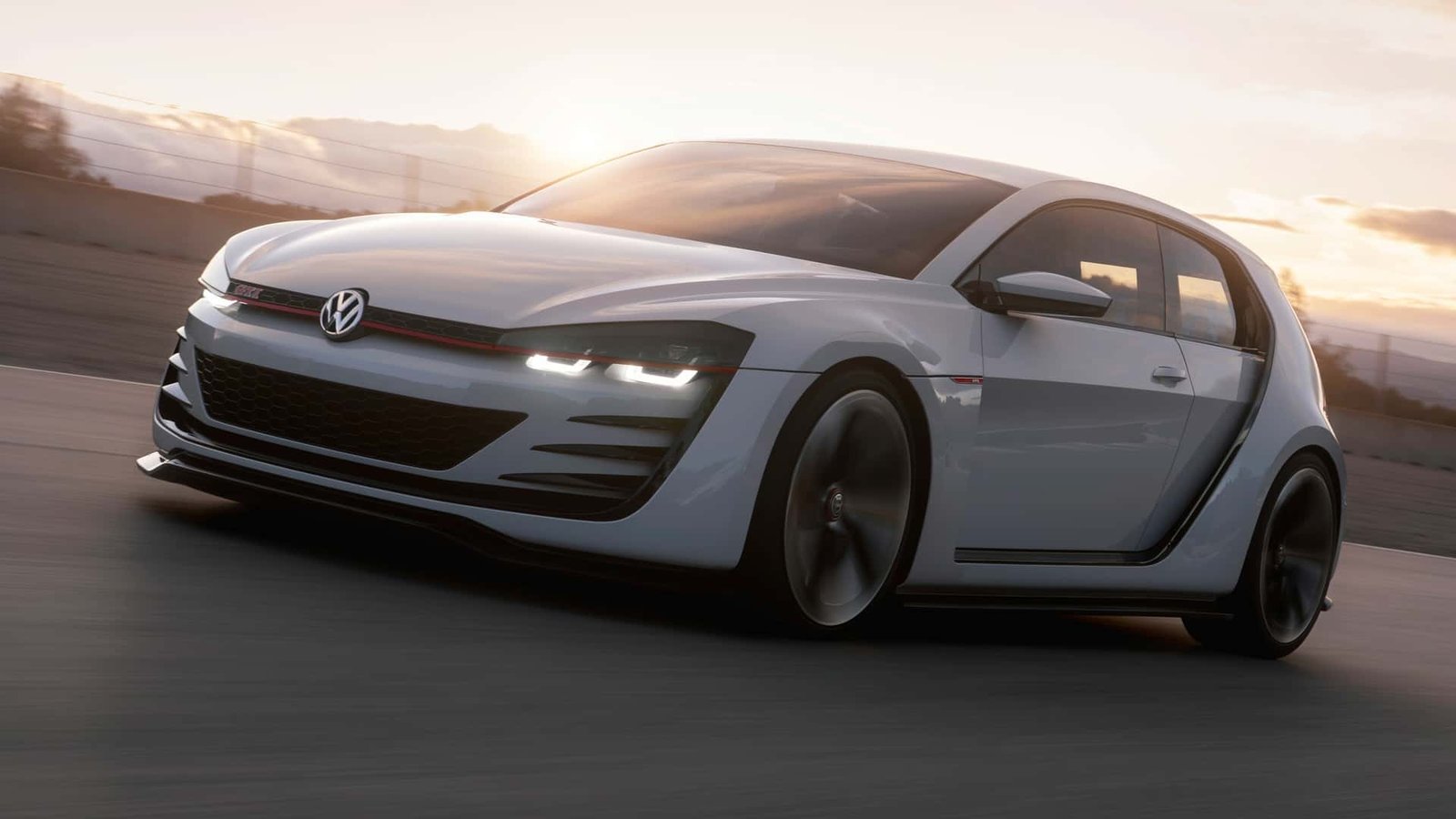
One conceptual GTI that wasn’t quite as outlandish arrived in 2013, shortly after the seventh-generation Golf GTI hit the market. VW has also pulled this one-off out of storage, and although it wasn’t as radical as the other two, it still had plenty to offer. Based on the now-defunct three-door body style, the Design Vision GTI depicted a track-focused version even more hardcore than the new Edition 50.
Engineers in Wolfsburg shortened and lowered the body, widening it by 2.8 inches (71 millimeters) over the Mk7 GTI for a more aggressive stance. To further separate it from the road-going model, VW designed bespoke 20-inch center-lock wheels and installed carbon-ceramic brakes at all four corners.
Photo by: Volkswagen
Inside, the Design Vision GTI differed substantially from the production model. Not only did it ditch the rear seats to shave weight, but it also featured a completely redesigned dashboard. I can’t recall whether I noticed the similarities back then, but the dash has a hint of an Audi R8 vibe. It hails from a time when VW interiors prioritized functionality, as even this track-oriented, stripped-down concept retained physical buttons and knobs.
Behind the pair of bucket seats sat an X-shaped strut brace to stiffen the chassis, while two helmets strapped to the floor underneath underscored the concept’s track focus. Elsewhere, the red fabric door pulls looked as though they came straight from a Porsche 911 GT3 RS, and there was generous use of Alcantara and carbon fiber throughout the cabin.

Photo by: Volkswagen
Much like the GTI Roadster concept mentioned earlier, the Design Vision GTI abandoned the traditional front-wheel-drive formula in favor of an all-wheel-drive setup similar to the Golf R. The similarities extended to the engine, as this one-off used a twin-turbo 3.0-liter V6 producing 503 hp and 413 lb-ft (560 Nm) of torque to match the GTI Roadster.
Mirroring the open-air Golf GTI, this concept also sent power to both axles through a dual-clutch automatic transmission. The V6 and DSG combination, paired with a 4Motion system, enabled a 0–62 mph (100 km/h) sprint in 3.9 seconds and a top speed of 186 mph (300 km/h). As with the Roadster and the outlandish W12 little monster, the Design Vision GTI was a fully drivable concept.
VW never intended to put the car into production; its sole purpose was to draw a crowd at the GTI enthusiast meeting on the shores of Lake Wörthersee. Like the other two concepts, it was reportedly a handful to drive. Although fully functional, it lacked the refinement expected of a production model.
37
Source: Volkswagen
Motor1’s Take: These three concepts remind us of a time when VW was eager to experiment with its most important car. In 2026, the Golf GTI lineup is far less diverse than it once was. The three-door body style is long gone, and the manual gearbox has also been retired.
Looking at the glass half full, VW remains committed to the performance hatchback and has no plans to retire the Golf GTI anytime soon. Even with an electric Golf in the works, the current-generation model will likely stick around and remain available alongside the EV-only Mk9.
Read the full article here