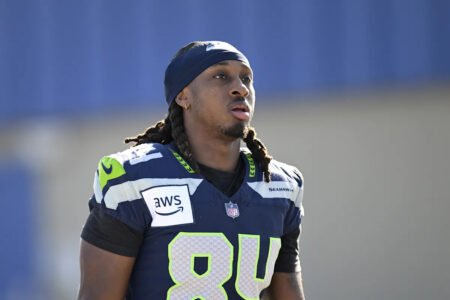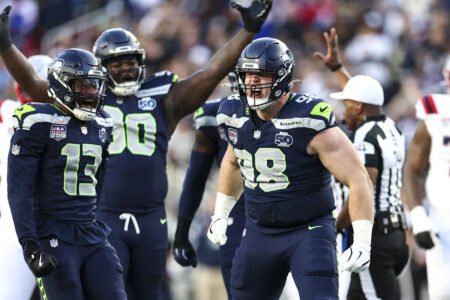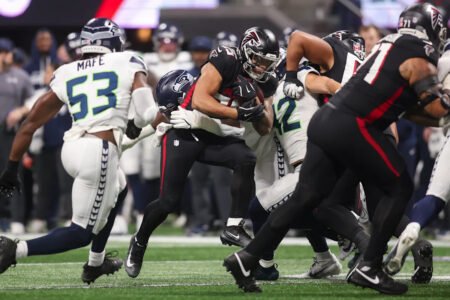

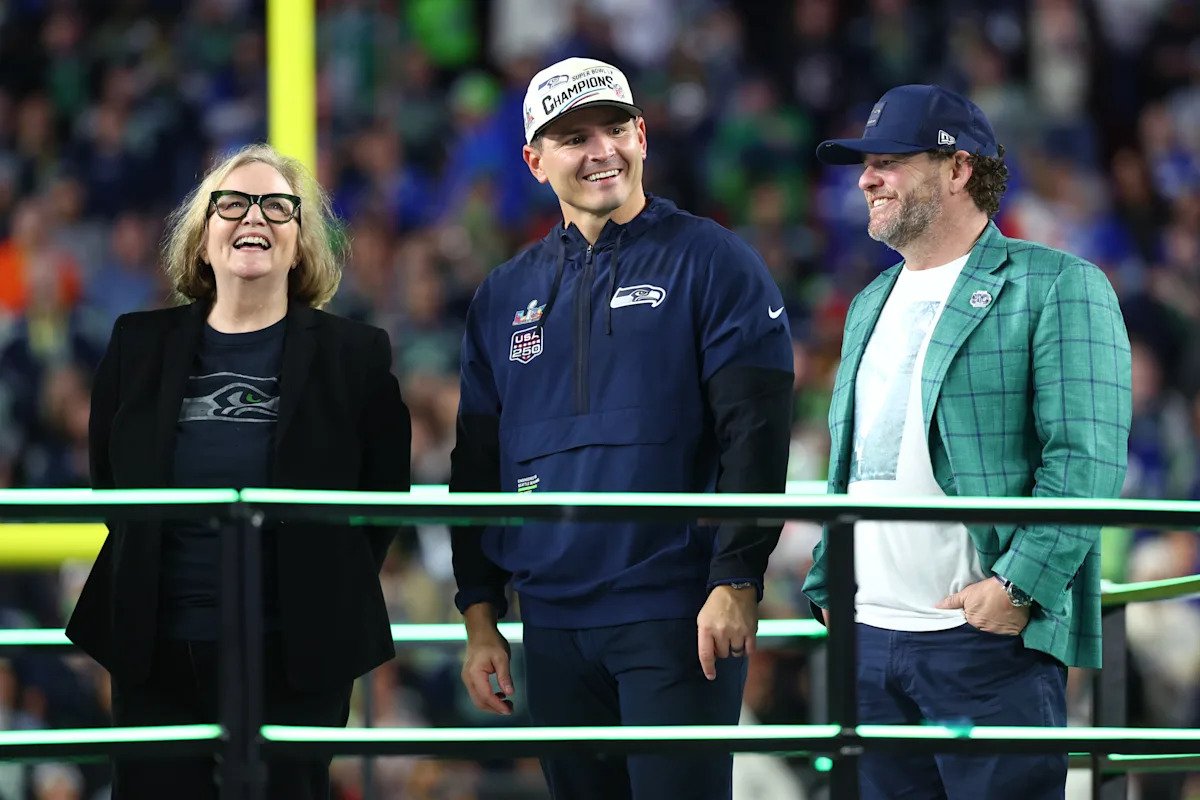
The Seattle Seahawks are Super Bowl champions.
If this article ended there, it would already be the most rewarding piece I’ve ever written. But the film tells a richer story. The final score wasn’t as lopsided as the defensive dominance suggested. Watching the tape without fan emotion, there was never a moment where Seattle truly lost control of this game.
Advertisement
All data used in this article was taken from PFF.
The Bad:
What still needs fixing in 2026?
As complete as this performance was, it wasn’t flawless.
Sam Darnold was pressured 14 times. That resulted in just one hit and one sack, but pressure volume matters. The cohesion of the offensive line has improved significantly since early in the season, yet it remains a work in progress.
New England leaned heavily on blitz packages and simulated pressures. They found situational success, particularly with simulated pressure looks — a defensive tactic designed to create pre-snap confusion. The defense crowds the line of scrimmage, presenting the illusion of heavy blitz (seven on the line in this case), only to drop multiple defenders into coverage while rushing four or fewer.
On one key snap, three defenders dropped after showing pressure, yet a defensive back looped free as an unaccounted rusher. Darnold escaped and improvised. Had the offensive line held up for even half a second longer, that likely becomes a touchdown to Jaxon Smith-Njigba.
On another rep, the left side of the line simply loses with power. The pocket collapses quickly. The offensive concept was designed to stress the outside corner vertically with layered routes. JSN won cleanly against Christian Gonzalez and had a clear path to six, but Darnold was forced to throw early because of interior push.
Advertisement
Center and right guard have been the primary concerns all season. Anthony Bradford and Jalen Sundell improved late in the year, but Bradford regressed in the final two games with mistakes that looked straight out of Madden glitches.
Milton Williams beat Bradford repeatedly — once with pure power after winning first contact, and again on a double-swipe move where Bradford had no recovery chance. Darnold ultimately converted a first down to Ken Walker on one of those plays, but Rashid Shaheed was wide open for a touchdown at the top of the screen if protection held.
That remains the biggest offensive offseason question.
The Good:
Klint Kubiak’s last dance
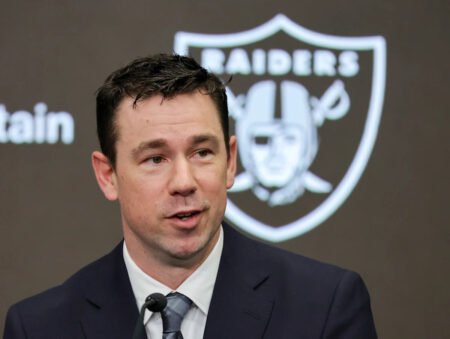
Minutes after the game ended, Klint Kubiak confirmed what everyone expected — he’s heading to the Raiders. But he left Seattle with a masterclass.
Given the Patriots’ defensive aggression, it was almost surprising how long it took for Kubiak to dial up a screen. Once man coverage was confirmed, New England paid for its aggressiveness. Excellent execution from Sundell and Bradford created a massive lane for the running back.
Creativity showed up again when JSN exited under concussion protocol. Kubiak leaned into heavy personnel: two tight ends on the line, one in the backfield, one receiver outside. From that run-heavy look, he dialed up play-action flood and converted. It’s Kubiak staple here but from a total different formation.
Against man coverage, Kubiak used bunch formations to create natural rubs and traffic. Jake Bobo and Rashid Shaheed’s routes weren’t primary targets — they were tools. Their stems protected Cooper Kupp’s release and forced defensive traffic, allowing the veteran to convert underneath.
Advertisement
View Link
Another excellent design: AJ Barner motions into the C-gap as if inserting into split-zone. The linebacker (#51) reacts aggressively before realizing it’s play-action. The Scissors concept develops behind him. Kupp (who later admitted he nearly ran the wrong route) clears space, and the tight end walks into the end zone for Seattle’s only offensive touchdown.
Late in the game, Kubiak went ultra-heavy: two tight ends plus two extra offensive linemen (Olu Oluwatimi and Josh Jones). The formation itself stressed New England’s personnel. That drive ends in a touchdown if not for a Jalen Sundell holding penalty.
Advertisement
A fitting finale.
Ken Walker: A Super Bowl MVP performance
With Zach Charbonnet sidelined, Ken Walker carried the load — and answered durability questions emphatically.
27 carries, 135 rushing yards.
2 receptions, 26 receiving yards.
161 total yards.
48% of Seattle’s total offense.
Walker became the first running back to win Super Bowl MVP since Terrell Davis in Super Bowl 32. His 135 rushing yards were the most by a running back in a Super Bowl since Davis’ 157 in that same game.
But the tape matters more than the stats.
Seattle leaned on split-zone concepts to attack the Patriots’ edges. Unlike the Rams game, Kubiak mixed tendencies well. On one key run, Walker patiently pressed the line, waited for Elijah Arroyo’s split-flow block to seal, then cut decisively.
Walker’s growth this season is obvious: patience. He no longer bounces runs at the first sign of congestion. On another play, he plants left, forcing the defender engaged with Sundell to shift gaps. That subtle hesitation creates a better blocking angle for the center. Combined with Bradford’s strong rep, it becomes a chunk gain.
Again and again, Walker pressed the line, waited for daylight, then exploded through the crease between Grey Zabel and Sundell.
On a variation of pin-and-pull, Bradford struggled, and interior leakage forced Walker to adjust the designed aiming point. He bounced outside, maintained balance, and turned a potentially stuffed run into a significant gain.
Patience doesn’t eliminate his explosiveness. It enhances it.
His acceleration through the second level is different. Once he identifies the crease, he shifts gears immediately. Several runs ended only because the sideline intervened.
That blend — vision, discipline, and burst — won him MVP… and amazing blocks from Eric Saubert and Cooper Kupp.
A dominant Seahawks defense
Drake Maye was criticized post-game. His shoulder was mentioned. But this is the same quarterback who excelled against man coverage and ranked among the best under pressure this season. His talent is real — which makes what Seattle did more impressive.
On one snap, the Seahawks blanketed every option. Maye held the ball, and Byron Murphy closed the deal.
Seattle deployed dime personnel, essentially a Bandit package (a package that Ken Norton Jr. used extensively, especially in his victory against the Chiefs in 2018 to fight Travis Kelce) — six defenders on the line. Devon Witherspoon timed a late blitz perfectly, attacking just before the snap to prevent protection adjustments. Meanwhile, defensive tackles dropped into short zones, removing Maye’s quick outlets.
The game plan clearly targeted Will Campbell (credited by PFF with eight pressures allowed). On one rep, only four rushed, with Boye Mafe dropping to the flat and Emmanwori/Jones handling hook zones. Witherspoon beat the left tackle with a violent swim move for pressure.
Notice the adjustment: when Spoon blitzed, Coby Bryant rotated down to protect the vacated zone, with inside support layered behind him. That’s coaching and communication.
Macdonald didn’t blitz recklessly. He pressured with four when possible and dialed up heat in high-leverage moments. Another late blitz from Witherspoon forced chaos — and eventually a defensive touchdown. A pick-six.
Advertisement
Super Bowl 48 echoes.
Sam Darnold: A hero without playing hero Bball
19 of 38.
202 yards.
1 touchdown.
The numbers won’t headline documentaries.
But Darnold led the league in turnovers during the regular season and committed zero in the postseason. That discipline mattered more than gaudy stats.
Yes, he missed throws. A quick pass to Cooper Kupp should have been placed further outside for run-after-catch opportunity.
Another pass to JSN was thrown behind him and nearly intercepted after JSN won the stem against Gonzalez.
But Darnold made timely plays.
On one snap, miscommunication between Zabel and Sundell created what looked like a free sack. Darnold escaped, extended, and gained critical yards with his legs.
Advertisement
From the end-zone angle on Bradford’s lost rep, you can see how Darnold subtly slides, resets, and converts a first down that should have been negative yardage.
And when Kubiak dialed it up, Darnold delivered. JSN drew two defenders vertically, Shaheed’s YAC threat held intermediate zones, and Kupp won cleanly. Darnold placed a perfect strike to #10.
He didn’t need to be Superman.
He just needed to be steady.
He was.
Final Thoughts
This game was the season in microcosm.
An offense that wasn’t flashy but was efficient. A defense that controlled games. A team that avoided self-destruction when it mattered most.
It wasn’t perfect.
It was championship football.
Free agency looms. The 2026 season has already begun.
But for now?
Seattle stands alone.
Go Hawks.
Read the full article here