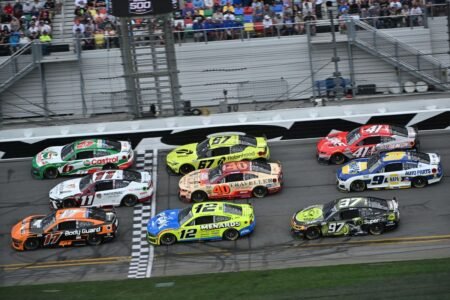

From the start, the Daytona 500 has had its fair share of close finishes. In the past, they were measured in feet or car lengths. Now, NASCAR can get the exact timing down to the thousandth of a second.
Tuning into the Daytona 500 for the casual fan is all about the wrecks and the close finishes. There just isn’t anything like seeing two drivers side-by-side coming out of the trioval and across the finish line.
Advertisement
Many of the sport’s biggest names have been involved in photo or near photo finishes in the Daytona 500 over the years. Even before modern-day drafting became the norm. However, we all know how pack racing can create these dramatic moments and finishes.
So, let’s get into the closest finishes in Daytona 500 history. The five closest finishes feature a few fan-favorite moments, and of course, some heartbreaks.
#5 – Trevor Bayne Over Carl Edwards, 2011 Daytona 500
Trevor Bayne celebrates winning the Daytona 500. Mandatory Credit: Mark J. Rebilas-Imagn Images
(Mandatory Credit: Mark J. Rebilas-Imagn Images)
Back in 2011, Trevor Bayne made history. Not only did he become the youngest driver to ever win the Daytona 500, he did it in one of the closest finishes in the history of the vent.
Advertisement
Bayne won over Carl Edwards. Wood Brothers against Roush. All that separated the two was 0.118 seconds. Into history, Bayne and the No. 21 car went. They also fell into the hearts of the NASCAR fanbase.
#4 – Lee Petty Over Johnny Beauchamp, 1959 Daytona 500
In the very first edition of the Daytona 500, Lee Petty won by a mere two feet over Johnny Beauchamp. We don’t know what that would be like in terms of the exact seconds, but the photo is one of the most iconic in the early era of the sport.
Advertisement
Of course, we weren’t going to get through this list without a bit of NASCAR royalty being mentioned. Lee Petty doesn’t get talked about as much, and he had a kid named Richard who did some good things in the sport, but his contributions remain prevalent to this day.
#3 – Austin Cindric Over Bubba Wallace, 2022 Daytona 500
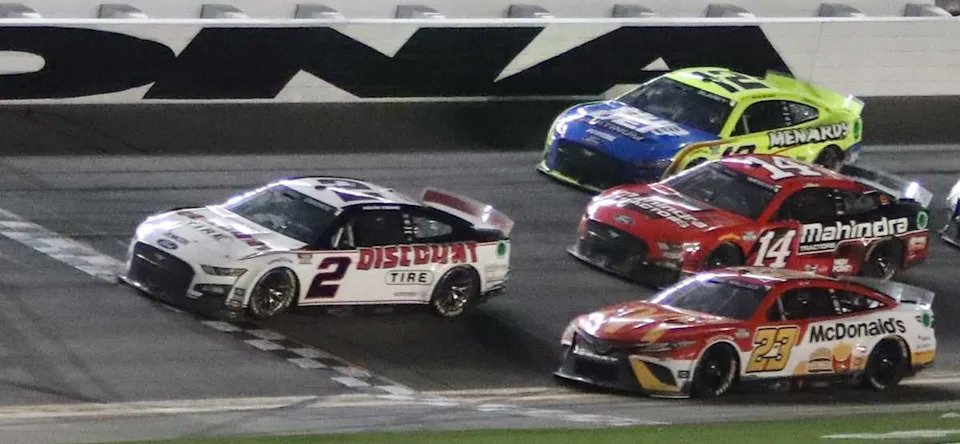
Austin Cindric wins the 2022 Daytona 500 over Bubba Wallace. David Tucker/News Journal / USA TODAY NETWORK
(David Tucker/News Journal / USA TODAY NETWORK)
As a rookie in the NASCAR Cup Series, Austin Cindric made history in the 2022 Daytona 500. I was a thrilling finish with a late restart that set up the biggest win of Cindric’s young career.
Advertisement
0.036 seconds is all that separated the No. 2 car from the No. 23 car. It was one of those “what if?” moments for Wallace, and one of those life changing moments for Cindric. Quite a debut for the Next Gen car, don’t you think?
#2 – Kevin Harvick Over Mark Martin, 2007 Daytona 500
Talk about iconic moments. Kevin Harvick gets the win in the Daytona 500 and he has to do it over Mark Martin. Two legends of the sport and two of the finest drivers to ever sit in a stock car. These two went down to the wire and Harvick ended up on top.
Advertisement
When all was said and done, Harvick edged Martin by 0.020 seconds. One of the all-time great finishes of not only the Daytona 500, but considering who it involved, the history of NASCAR. You don’t get finishes like this every day.
#1 – Denny Hamlin Over Martin Truex Jr., 2016 Daytona 500
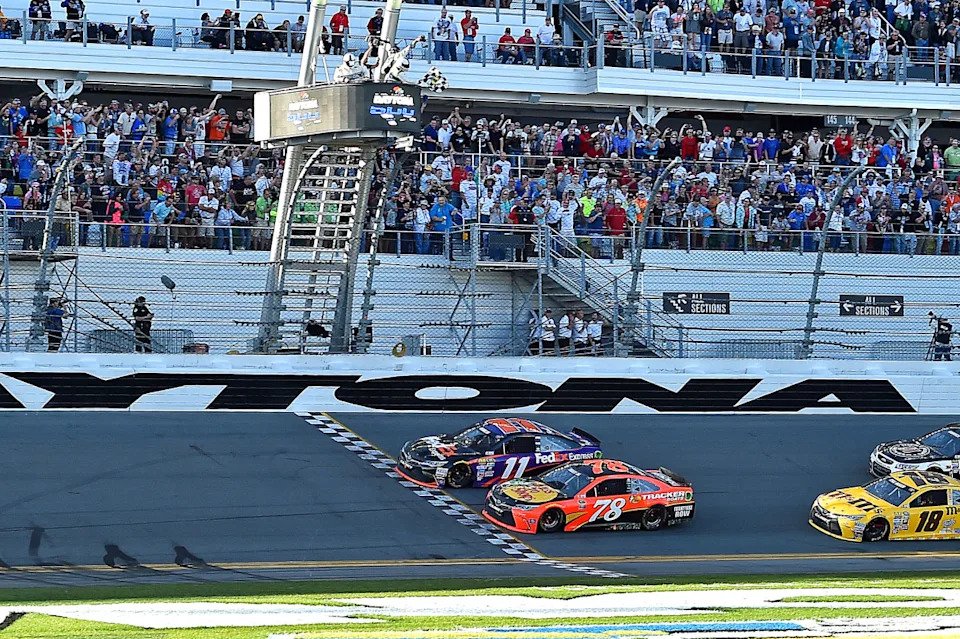
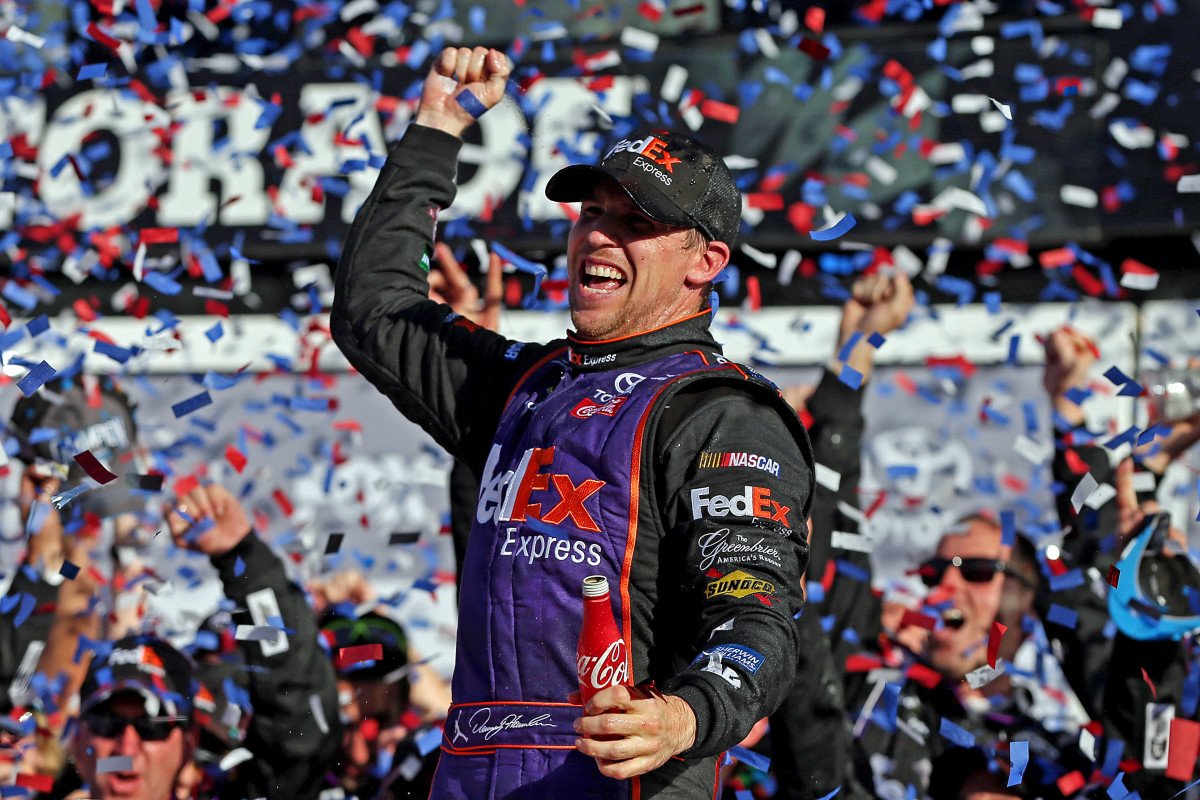
Denny Hamlin wins over Martin Truex Jr. in the 2016 Daytona 500. Mandatory Credit: Jasen Vinlove-Imagn Images
(Mandatory Credit: Jasen Vinlove-Imagn Images)
The first of three Daytona 500 victories for Denny Hamlin, the 2016 Daytona 500 is one of those races that haunts Martin Truex Jr. fans to this day. Hamlin got the win and it helped propel his career to new heights as a winner in the Great American Race.
Advertisement
In the closest finish of all-time in the Daytona 500, Hamlin got the win by a mere 0.010 seconds. It was not a matter of feet, but inches that separated the two. Could Hamlin make it four Harley J. Earl trophies this year?
This story was originally published by Athlon Sports on Feb 7, 2026, where it first appeared in the Racing section. Add Athlon Sports as a Preferred Source by clicking here.
Read the full article here