


On Friday, MLB Pipeline released their annual preseason ranking of the league’s top 100 prospects. Five Brewers made the cut, all of whom were also named to Baseball America’s Top 100 prospects just a few days earlier.
Since I already briefly profiled each prospect when the Baseball America list came out, I won’t repeat myself. If you want to read a quick profile on each of the prospects, check out that article.
Advertisement
Now, I’m interested in why the two lists differ; in other words, why did MLB Pipeline rank each prospect lower or higher than Baseball America did?
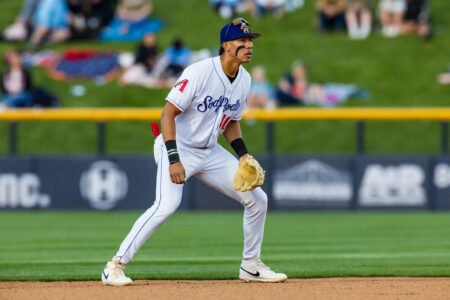
3. SS Jesus Made (BA No. 4)
Made’s status as one of the best prospects in baseball is pretty universally agreed upon. Pipeline likes Made more than Cardinals infield prospect JJ Wetherholt, who Baseball America ranked above Made, but the difference between Made and Wetherholt (and Kevin McGonigle, Leo DeVries, and even No. 1 overall prospect Konnor Griffin) is pretty minimal. While none of those shortstop prospects are exactly alike, all of them are seen as having superstar potential and have (so far) lived up to their billing in the minors. Any of those guys could end up being the best big leaguer out of the group.
One reason Pipeline may have ranked Made above Wetherholt is that he’s more likely to stick at shortstop, often considered a “premium” position. Wetherholt will probably move over to second or third base (at least early in his career) because he’s not a better defensive shortstop than the Cardinals’ current shortstop, Masyn Winn. Milwaukee does have a stud defensive shortstop prospect in Cooper Pratt, but he’s a prospect; Winn just won a Gold Glove. Brewers shortstop Joey Ortiz is also arguably a top-three defensive shortstop in the league, but his bat has left a lot to be desired early in his career.
Advertisement
26. INF Luis Peña (BA No. 47)
Peña is ranked over 20 positions higher than he was by Baseball America. As detailed in the BA article, Peña’s offensive stats took a dive once he was promoted to High-A. Pipeline holds a more optimistic view of that stretch:
“Peña remained aggressive in search of contact and High-A pitchers exposed him as allergic to non-fastballs, throwing offspeed roughly 60% of the time after his promotion. Peña moved so quickly he needed exposure to that quality of stuff, but now, it’s on him to adjust back.”
The other thing holding Peña back, for now, is his defense. While he’s fast, has good range for his size, and has an above-average arm, he showed a tendency to “let balls slip by or… sail throws.” His eventual home may be at second or third base.
Advertisement
Peña is pretty raw, very young (turned 19 in November), and is still developing, so there’s a lot of projection involved in predicting his potential future outcomes. Still, he has the tools to be a top 10 prospect on this list someday — ostensibly part of the reason he’s ranked so highly.
51. SS/2B/OF Jett Williams (BA No. 71) & 64. SS Cooper Pratt (BA No. 50)
While Pratt (Pipeline No. 64) was ranked higher than Williams (Pipeline No. 51) on BA’s list, their places are reversed here. Pratt is a better defender and might have more overall upside if his bat develops as hoped, but that’s far from a certainty.
Pratt got on base at a solid clip last year (.343), but his batting average (.238) and slugging percentage (.348) still leave something to be desired. Williams (.828 OPS, 17 HRs) had a much better offensive season than Pratt (.691 OPS, 8 HR) did last year. Williams is also fast (clocking sprint speeds above 30 ft/second), a great baserunner, and incredibly versatile. He’s played at least 30 minor league games at three different positions (shortstop, second base, and center field). Pipeline sees Williams as a “good fit in a Milwaukee organization that highly values short, speedy types up the middle.” Since Pipeline tends to weigh current production and proximity to the big leagues a bit more heavily than Baseball America, it makes sense that Williams is ranked higher than Pratt.
Advertisement
For what it’s worth, the “short” thing feels like a strange inclusion to me. Other than Caleb Durbin (who isn’t normally an up-the-middle player for the Brewers), none of the Brewers’ middle infield and center field options are even that short. Joey Ortiz is 5’10”, Brice Turang is 5’11”, Jackson Chourio and Blake Perkins are listed at 6’ even. Garrett Mitchell is 6’2”. Milwaukee didn’t trade for Williams because of his diminutive (5’6”) stature; they traded for him because they value fast, athletic, defensively capable players who can get on base.
100. Brandon Sproat (BA No. 81)
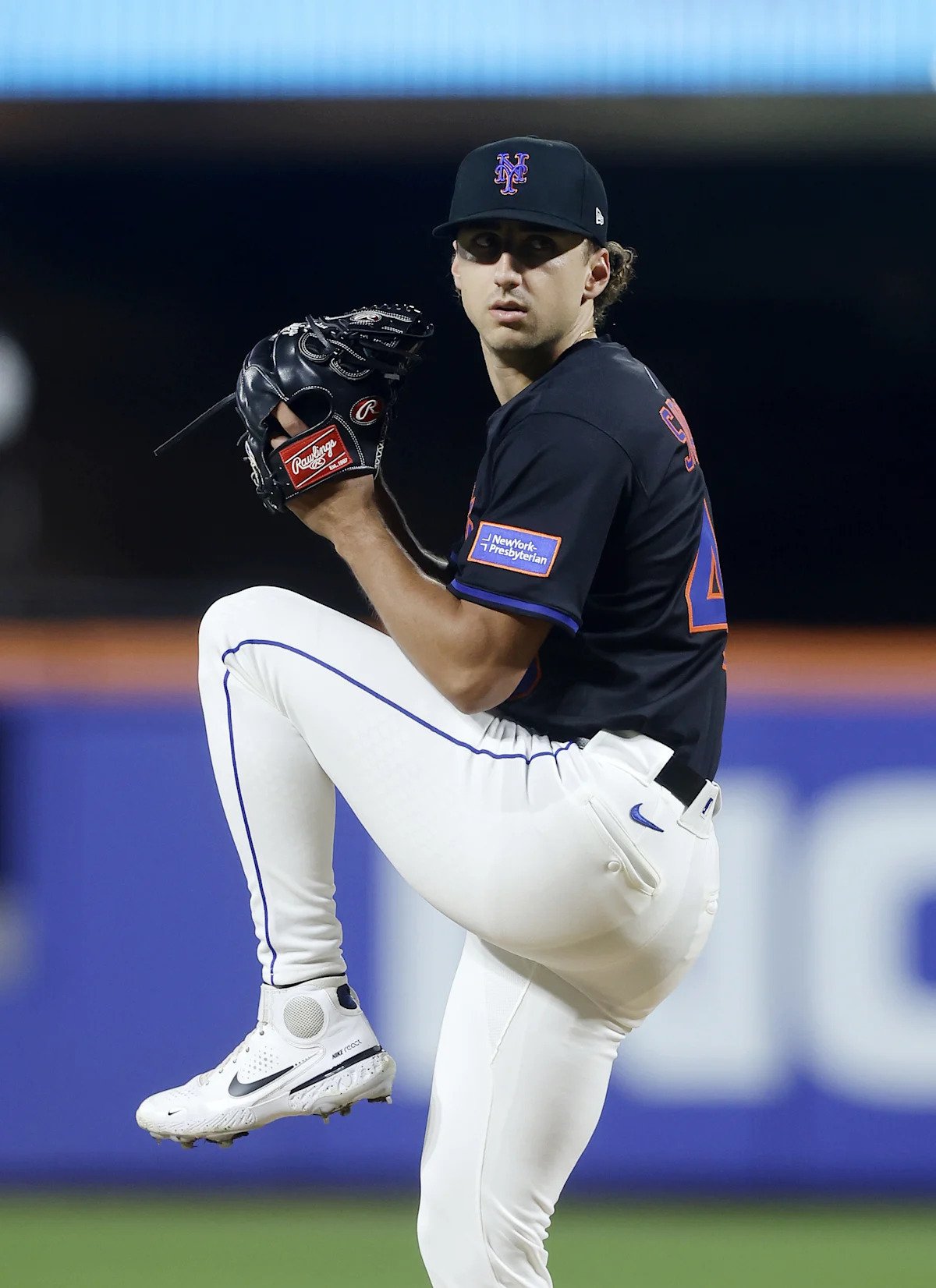
Pipeline’s Mr. Irrelevant is a prime pitching lab candidate. Sproat has great stuff; Pipeline gives him a 60-grade slider and a 55-grade curveball and changeup. He’s ranked this low because he had an underwhelming season in Triple-A last year (4.24 ERA) and didn’t pitch any better in four September appearances with the Mets (4.79 ERA, albeit with 17 Ks in 20 2/3 innings pitched). He’s also 25 and will be 26 by next year’s playoffs.
The acquisition of Sproat gives me Quinn Priester vibes. Both were highly-drafted prospects with great stuff who struggled during their first tastes of the big leagues. Priester put together a great season with Milwaukee last year; hopefully, Sproat can do the same. If any team can get the most out of him, it’s the Brewers.
As I said in the Baseball America article, I have a breakdown of both Williams and Sproat coming soon… stay tuned.
Read the full article here