


The Milwaukee Brewers play big. The zythophilian juggernauts of the NL Central have the same number of division titles as the Dodgers over the past half decade. They’ve been punching down on the incompetent and/or uncompetitive clubs in their division, while managing to outmaneuver the Chicago Cubs, and pushing the St. Louis Cardinals into their first period of irrelevance in the 21st century. Many of those haymakers have come from a vaunted pitching development program, generating aces from unexpected places. Corbin Burnes, Brandon Woodruff, and Freddy Peralta have benefited from brilliant bullpens, too, with Josh Hader, Devin Williams, Abner Uribe, and Trevor Megill blossoming on the West Coast (of Lake Michigan).
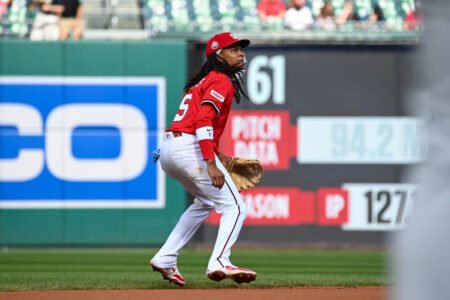
The newest focus for the Brew Crew, however, has been on punching up. While they can frequently outfox their low-effort division-mates, what’s put Milwaukee in perennial competition in recent years has been the capacity to literally punch up. Milwaukee had the shortest position player group in MLB last year, in particular on the infield dirt. None of 3B Caleb Durbin (5’7), SS Joey Ortiz (5’10), 2B Brice Turang (5’11), nor 1B Andrew Vaughn (5’10) clear the six-foot line. Both OF Isaac Collins, since traded to Kansas City, and OF Sal Frelick, are also just 5’8. These are normal sized human beings, even on the taller end in some cases. But like Leo Rivas, clocking in at 5’8, 150, they are players against the grain of the modern, tools-oozing Adonises who will often earn the centerfold from scouts and analysts.
Advertisement
MLB has always had room for the little guy. Unlike basketball and football, which have the occasional pint-sized performer (or have narrow, specialized niches for such players), baseball players have always been able to more easily walk down the street without being immediately identified as athletes. It’s an endearing feature of the game, one that allows people of all ages and sizes to identify more easily with those on the field. There is an immense amount of work that goes into being a pro athlete in any sport, but most of us could simply never be Aaron Judge or Rob Gronkowski, Josh Allen or Victor Wembanyama.
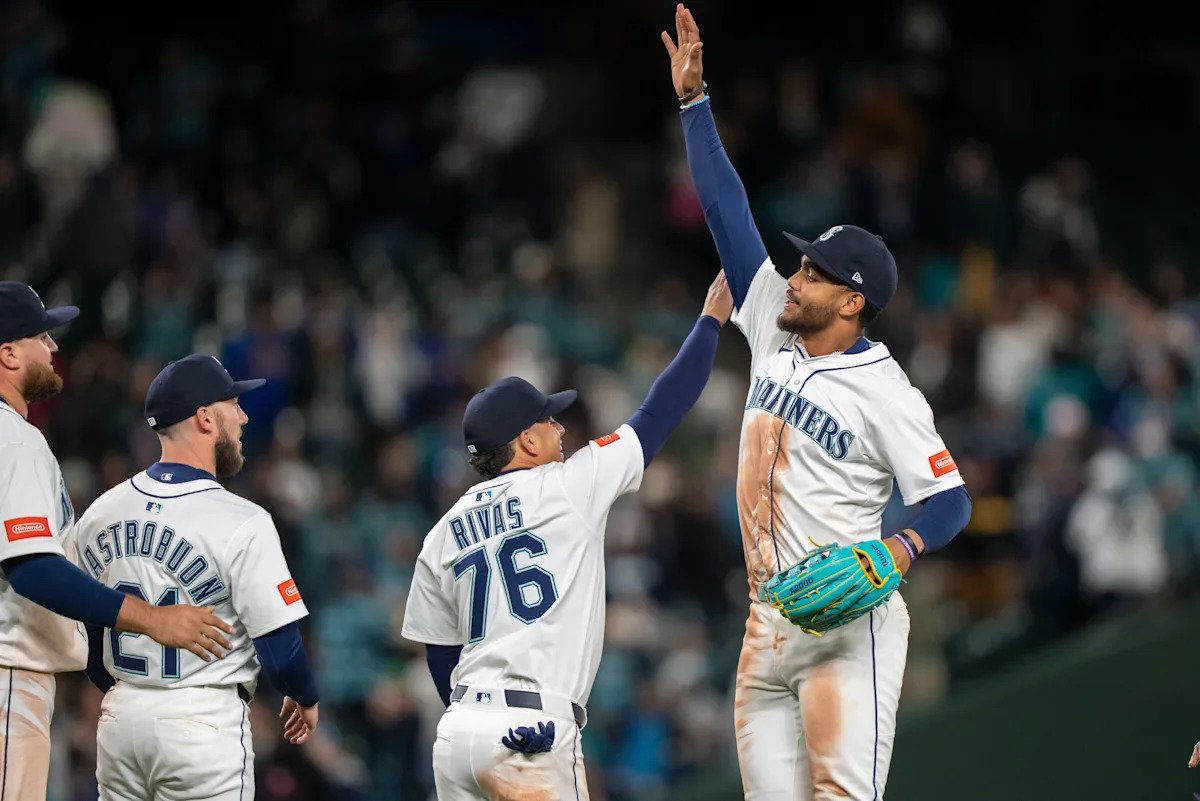
But Leo Rivas? Leo Rivas could be anybody.
The good-natured Venezuelan turned 28 this past October, famously celebrating his birthday with one of the biggest hits in Seattle Mariners history. His game-tying pinch-hit RBI single capped a stellar second season, with Rivas performing his way into a key role late in the season as the 2B and backup infielder.
View Link
Advertisement
With Jorge Polanco gone, there’s a case for Rivas to take on the starting 2B spot. After all, in half a season of total big league games, he’s mustered a 107 wRC+ with a patient approach, steals bases frequently and efficiently, and can cover the entire infield capably. Switch-hitting makes him more versatile than many utility players, and yet Seattle seems unlikely to give Rivas the pole position.
Cole Young, no towering titan himself, is much younger and more heralded than the man who came to Seattle as a minor league free agent. Despite a disappointing debut season, Young has shown higher capacity to hit the ball hard, and has on paper and otherwise similar profile to that of Little Leo. I can’t say I disagree ferociously with Seattle’s assessment. After all, for nearly a decade, Rivas struggled to separate himself as a minor leaguer. The area in which hitters who lack meaningful big league power can still be successful is a target you’d want George Kirby or Bryan Woo to be aiming for.
Still, I am concerned Rivas is being literally overlooked. Much of Milwaukee‘s lineup has been effective, not just because of their skill, but because they have been given consistent opportunities. Rivas does not look like most of the sport’s best players. And yet, everything he did last year looked at least like a solid big leaguer. Going out on a limb for players who looked like Rivas has been a boon for the Brewers. In Seattle, soft line drives and free passes are the bread and butter of their long time stalwart shortstop, J.P. Crawford. Why shouldn’t it be the foundation for their keystone as well?
Rivas will likely start 2026 in competition with Miles Mastrobuoni for the utility spot on the bench. Because he still has minor league options remaining, it’s likely the switch hitting Venezuelan starts his season in Tacoma. I can’t help but wonder if he’s capable of more.
Read the full article here