

The grass isn’t always greener. The skies, famously, aren’t liable to be much bluer elsewhere either.
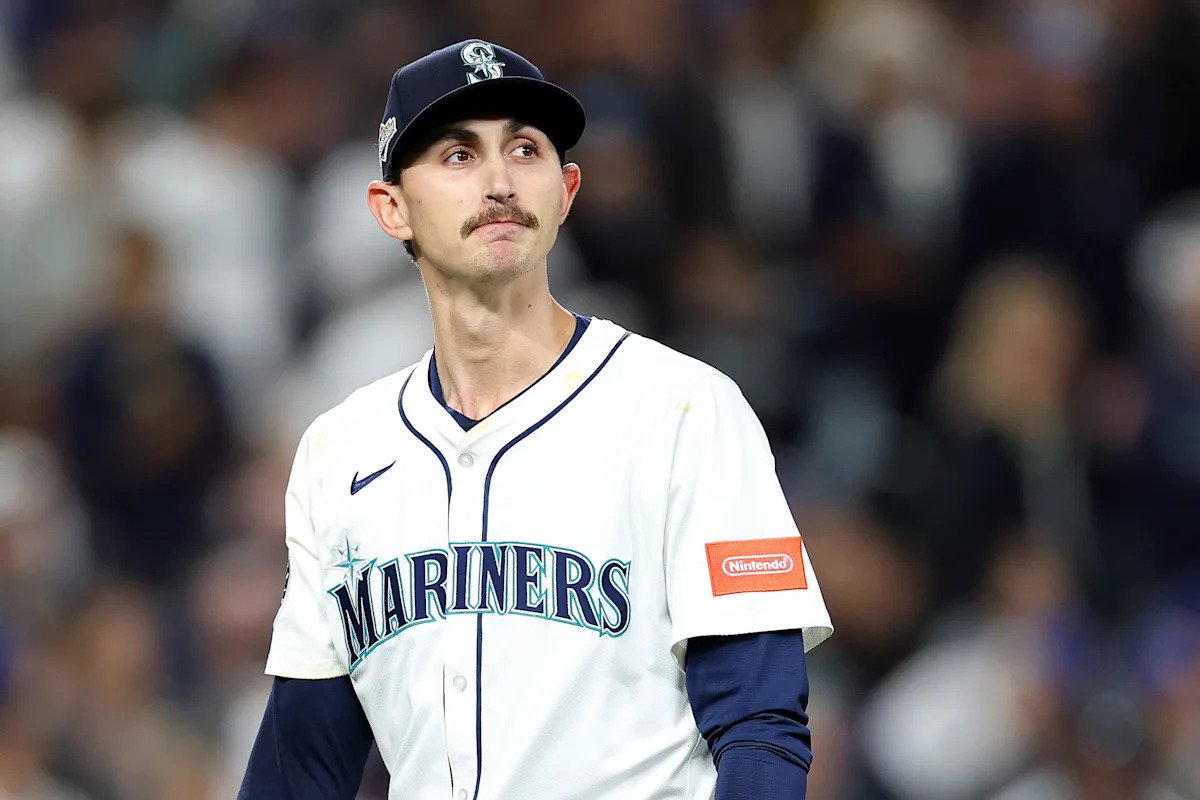
George Kirby has thrived in Seattle. A perfect fit for the Mariners as an organization, obsessed, as they are with avoiding free passes and controlling the count and zone. Intense on the mound and, seemingly, off of it,, Kirby is a beneficiary of the organization into which he was drafted too. A fly ball pitcher who, for most of his career, has been among the most contact dependent hurlers in the sport, Kirby thrives in Seattle.
Advertisement
All until 2025.
There was no catastrophe for Furious George, but things began on the wrong foot. Not only was he sidelined to start the season with shoulder inflammation, but his knee had been bothering him as well, contributing to a longer-term outlay that also doubled as Kirby’s first ever trip to the injured list in his big league career. Upon his return, for the first time ever, Kirby struggled. Extensively. He was drubbed out of the gate by the Astros and Nationals, and spent the rest of the season attempting to claw back into alignment. Kirby feasted upon the Angels for 37 strikeouts to just three walks and six earned runs in 19.1 innings, though rest of the league ran him for a 4.64/3.58 ERA/FIP in 106.2 IP.
In any representation of his last campaign, two clear storylines stand out. First is Kirby’s willingness to work outside the zone, as the famously walk-averse righty ran his highest-ever walk rate. 5.5% is still 18th-lowest in MLB among pitchers with at least 120 innings (of which there were 105), but Kirby’s been 6th, 1st, and 2nd in the category since entering the league. Cause for concern? Not… really. Kirby’s strikeout rate ticked up in essentially equal measure, perhaps circumstantial or perhaps with intent as he looked behind him (more on that in a moment). By K-BB%, Kirby has ranked 21st, 17th, 20th, and… 16th from 2022-2025, echoing Luis Castillo in his capacity to consistently deliver high-quality numbers despite frequent tweaks to his pitch mix and locations.
Yes, Kirby pitched out of the zone more than ever, but he got the expected outcomes. More whiffs than ever, the best called strike-plus-whiff rate of his career. Fewer swings, sure, and less chase even, but the chases he did get were more impotent. If Kirby’s intention was to mitigate some of the ambushability inherent to his strike-pumping ways, however, he only partially succeeded. Hitters still didn’t clobber Kirby, but while they were whiffing more, they barreled him up more frequently too. It’s not clear to me that this is connected, but that’s the confusion of gauging Kirby’s last campaign: what is tied to injury and rust, and what was intentional alteration?
Advertisement
Kirby cut his splitter and barely worked in a lesser changeup due to difficulty in using the pitch comfortably as he returned to health. Was the lowered arm slot which shifted the shape of his sinker and blurred the previously-distinct movement of his slider and curveball a tactical adjustment, or a compensation for his preseason discomfort? What was his plan, and what was what he did after getting hit in the mouth?
View Link
The second point of delineation is evident in Kirby’s overall line a year ago. A 4.21/3.37 ERA/FIP. We know better now than to attribute batted ball outcomes as pure fortune, but as we’ve addressed already, Kirby didn’t start giving up purely rockets. A small uptick in hard hit rate does not explain the 9th-highest ERA-over-FIP in MLB (among our same 105 player, 120+ IP cohort). Three of the top-10 in this range are, as to be expected, Colorado Rockies, with Diamondbacks and Phillies in the mix as well.
To have things go this poorly requires some ill fortune, as Dylan Cease and Sonny Gray can attest. But to have this occur with Seattle as your home park is difficult to reconcile. Kirby’s 0.85 gap between his earnie and his fippie (don’t love that) is the worst in a decade for a Seattle starter at this workload. Marco Gonzales ran a 0.57 gap in 2018, 15th in MLB, the last time a Mariner entered this range of ill fortune despite the contact-suppressing confines of T-Mobile Park at their backs. It requires a retreat to 2016 James Paxton to find a Seattle pitcher more maligned than Kirby, whose 0.99 ERA-FIP presaged a stretch of several brilliant seasons for the Big Maple. In T-Mobile Park history, only the most contact-managing, cartoonishly unfortunate have outpaced Kirby’s bitter, season-long pill.
This is about where I’ve hit my wall. Kirby’s issues are somewhat intertwined to defensive ineptitude, but neither by BABIP nor contact outcomes does his performance stand out too egregiously. Instead, it seems like Kirby’s mistakes were punished, even when they stayed in the ballpark, often enough that the exemplar of efficiency was unable to methodically carve through opponents with the ease he’s shown in seasons past.
Advertisement
Kirby’s plan in 2026 appears to be that of a player dissatisfied with his previous campaign. His splitter had been an adaptation of Kevin Gausman’s famous out pitch, and its jettisoning for comfort forced him to tie a hand behind his back. If he’s intending to return the pitch to his mix in 2026, as has been intimated, that alone will aid him in his efforts to build on a more strikeout-shaped repertoire. A season ago, Kirby seemed primed to ascend to ace-hood in Seattle’s staff. The first struggle-filled season of his career may finally grant the New York suburbanite what fuels him best: a chip on his shoulder.
Read the full article here