


Finding a new driver shaft is no simple feat. What driver shaft should you actually buy? You should go get fit by an authorized fitting center, but I’d be the world’s largest hypocrite if I didn’t also encourage the occasional buy and try experience.
The good news is there are tons of resources to gather good information on golf shafts, including directly from an OEM like Mitsubishi Golf. You can find profile information, tech sheets, spec sheets and explanations of their profiles. They also have a fantastic virtual fitting tool available to give you a head start on your research.
As you explore their site and other sites for information, here are three things I want you to keep in mind.
1. Shaft profile is king
Shaft profile is everything. It’s the single most important specification or characteristic of a golf shaft to make sure that you get right. Shaft profile is how the golf shaft is going to bend during the golf swing. Every golfer has a unique swing with it’s own unique shape. Think of all the times you’ve been watching golf on TV and seen the club path tracers for the pros. Those tracers are all very unique, even at the highest level of the game. And taking those “swing shapes” and matching them to the correct profile is going to be the difference in hitting the center of the face or not.
Shaft profile is measured and displayed as a relationship between the parts of the golf shaft. There are three parts of the golf shaft. Under the grip is the handle section; sometimes also referred to as the butt section of the golf shaft. On the other end of the shaft going into the club head we have the tip section. The middle… well the middle is just called the mid-section. Not a whole lot of fun there.
Xander Schauffele has been toying with a WB in the driver setup for 2026 Orlando Ramirez/Getty Images
Typically what I like to tell players is that they should try to match firmness with aggressiveness in the golf swing. If you really yank down from the top in transition, something with a stronger handle may benefit you. Players who may have a wider transition with a little bit more length and a little bit more drop before speed is activated, like a Collin Morikawa, might like something with a bit of a softer handle.
Gear
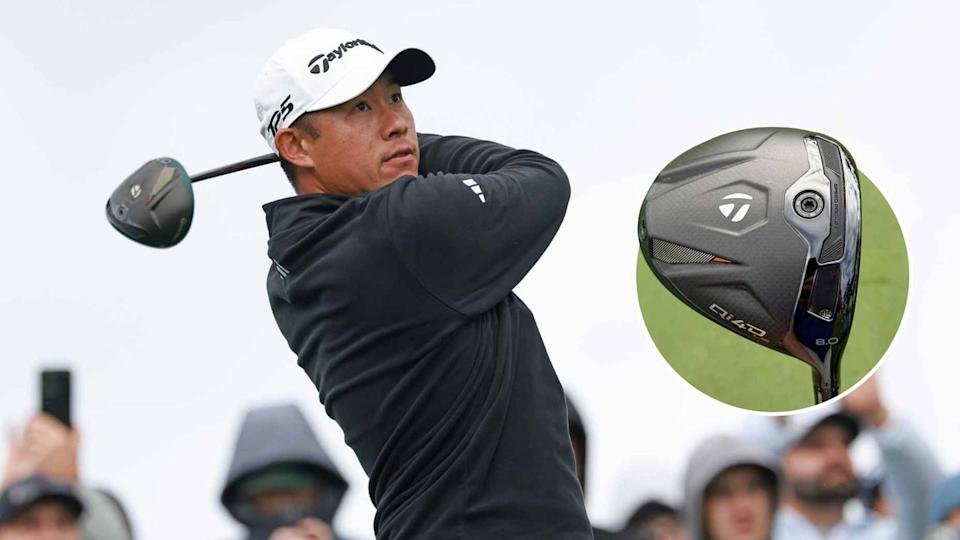
If you’ve noticed that the head is chasing in front of your hands during the swing, you may be playing too soft of a handle.
The handle helps to create lag in the swing, which helps to generate speed in the first half of the swing. A softer handle can help generate that speed for you, so for players a little bit wider or more tempo’d will appreciate the assist.
Players who are already fast from the top may feel like that softer handle can’t keep up. It’s a case of deciding whether you provide the speed, or the handle section does.
Here’s a fun video from the Epson Tour Championship last year with Isabella Fierro showing her how to fully unlock the profile of her Mitsubishi Diamana BB 63 Stiff.
The tip section has a similar story. Players who are a bit stronger and may lag the shaft more are going to appreciate a stronger tip section. Because they create lag through impact with a later release, the tip section doesn’t need assistance staying behind the hands. For players with an early release, matching up with a softer tip profile can help use the shaft to create the lag and the “kick” at impact that’s going to give them some additional club head speed and ball speed. Again, it’s making sure to match up the swing to the part.
2. Shaft flex… isn’t everything
Shaft flex is a very misunderstood shaft characteristic. It’s often stated that shaft flex is 100% connected to speed, but that’s not true. In multiple tests of my own, shaft profile has always won as the priority spec. Having the right shaft profile in the wrong flex is going to end up better than having the right flex in the wrong profile.
A lot of this is due to a misunderstanding of what shaft flex is really labeling. The biggest thing to understand is that shaft flex labels are in relation to that family of golf shafts in a silo. For example, Mitsubishi has two flagship shaft families: the Diamana Generation 6 lineup and the Tensei 1k Pro lineup. A stiff flex part from the Tensei family is not going to perfectly match up the feel and stiffness of a part from the Diamana family. They are designed with different players in mind. The only thing that’s going to be consistent is that a stiff shaft is always going to be stiffer than the same family marked with regular flex, and softer than that family marked with an x-stiff flex.
This is something that can be hard for golfers to get over. There’s such an ego or bias to the words shaft flex, that many players don’t realize what’s actually in their hands. All that matters is that once you’ve chosen the proper shaft profile for your game, which is how the shaft is going to bend, you test shaft flex to make sure that they shaft is behaving when you need it during the golf swing.

Fun fact: TX doesn’t always mean it’s a stiffer than X profile. Sometimes it means the shaft is a slightly different profile. Kenta Harada/Getty Images
3. Build specs
This is the last piece of the puzzle, and the piece that deserves to be tested with a fitter. It’s the last part of the equation for the perfect new driver build. How long does your shaft need to be and what weight should it be? There’s a bit more to dive into here on both accounts, which I will cover in more depth in the future, but for now I urge you to go test different lengths and weights with a fitter to see how it affects your ability to consistently hit the center of the face. Shaft droop, torque, lie angle and swingweight are all going to be affected by these decisions, and we can only cut once so let’s make sure we get it right!
In general, a longer or lighter shaft is going to be easier to launch and generate speed. I like to say that longer and lighter give players the opportunity to generate more speed. It’s never going to be a black and white yes or no for speed, but sometimes it’s really fun to swing the light, long and soft parts. It could create a perfect storm for speed! (I may have gone down a rabbit hole testing this.)
That’s it for now! I’ll be adding plenty more to the site in the coming weeks to break down the shaft selection process in more detail, walk you through all of the vocabulary you need to know, teach you how to get properly fit for shafts and so much more. Make sure to follow us on Instagram and YouTube for the latest content updates!
The post 3 things to know before you buy a new driver shaft | Bag Builders appeared first on Golf.
Read the full article here