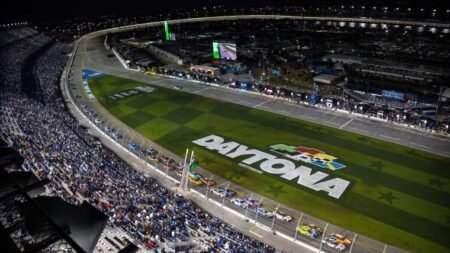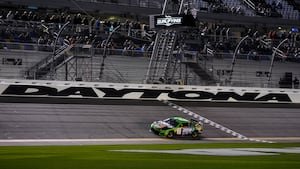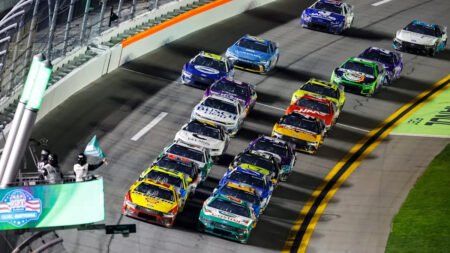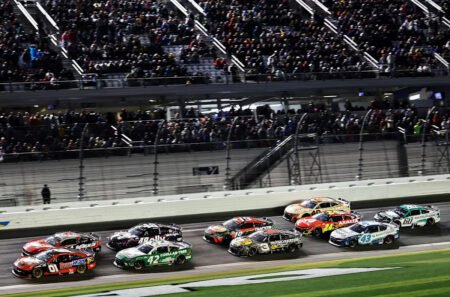


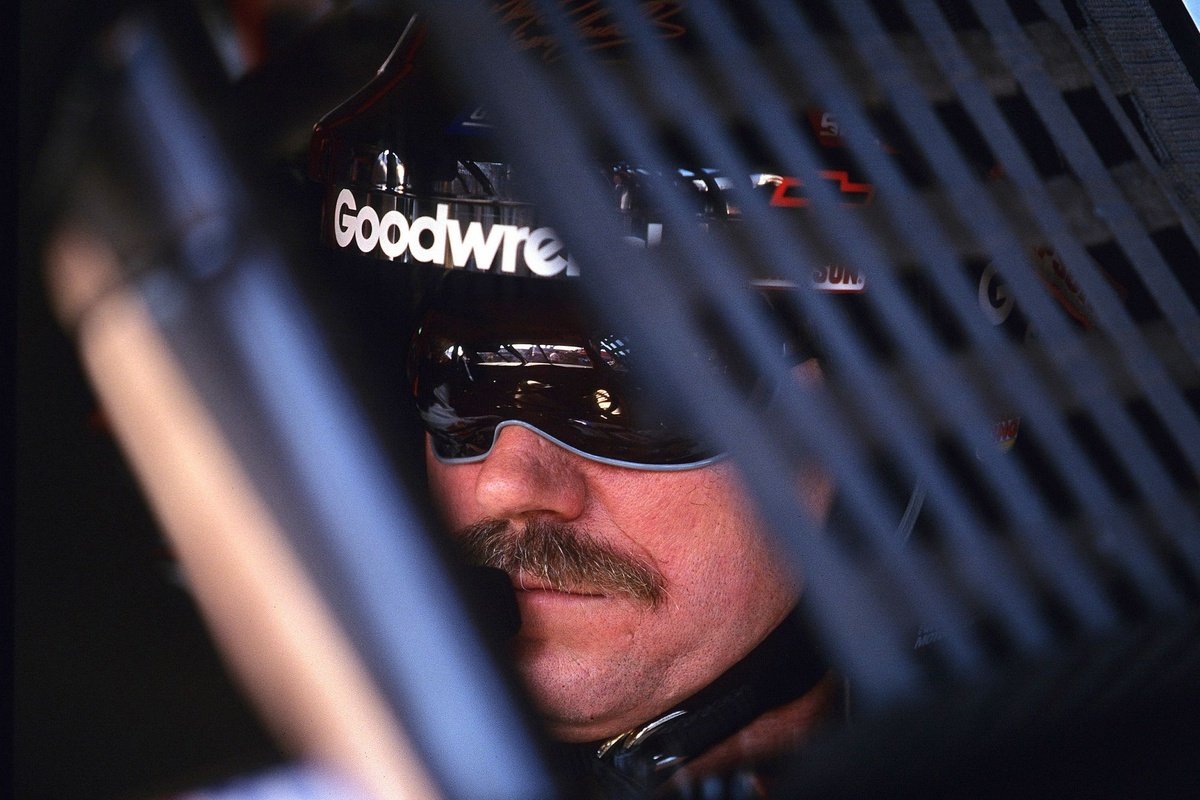
It is impossible to understate the impact Dale Earnhardt had on NASCAR, and the void left when he died on the final lap of the 2001 Daytona 500.
At the time, he was holding back several cars while the two he owned — the No. 15 of Michael Waltrip and the No. 8 of his son, Dale Earnhardt Jr., drove off to a Dale Earnhardt Inc. (DEI) 1-2 finish. But mere seconds from finishing third right behind them, Earnhardt made contact with Sterling Marlin, spun up the track, collided with Kenny Schrader and hit the outside wall in a head-on impact.
Advertisement
“This is undoubtably one of the toughest announcements that I’ve had to personally ever make, but after the accident in Turn 4 at the end of the Daytona 500, we’ve lost Dale Earnhardt”
Watch: First look at ‘We’ve Lost Dale Earnhardt: 25 Years Later’
Those were the words of NASCAR president Mike Helton several hours later, and nearly every NASCAR fan knows them by heart. With those words, the sport was forever changed.
Last year, Prime Video released a documentary on the life and death of Earnhardt, and it was without question the greatest and most grounded piece of media ever released in regards to NASCAR’s biggest star. It will likely never be topped, but NASCAR on FOX’s recent special was still worth a watch.
Advertisement
Read Also:
Here’s what makes ‘Earnhardt’ a documentary every racing fan should watch
Highlights from FOX’s new documentary
‘We’ve Lost Dale Earnhardt: 25 Years Later’ features Mike Helton, Rusty Wallace, Kurt and Kyle Busch, Frankie Muniz, Ryan Blaney, Joey Logano, Patti Wheeler, and Ryan McGee.
A simple setup — one black chair, and various voices from people within the industry as they explored that day and its lingering impact. It included NASCAR leadership, a TV executive, drivers who were in that, current stars who were children at the time, and more.
Advertisement
They all had different views of that day and its impact, giving some new insight into a race that has left an indelible mark in the minds of all who witnessed it. They also remembered their final interactions with the Man in Black, and the mark that left in their lives.
Helton, who told the world the unthinkable news, was friends with Earnhardt for years, having first met him in 1979.
“He was a working man’s hero,” remarked Helton, who said all the things that are well-known about the Intimidator. But when talking about that harrowing press conference, he said watching it doesn’t feel real, like it wasn’t really him standing there delivering those infamous words.
Advertisement
“I see the clip and that doesn’t — I don’t know what I feel,” said Helton. “It’s almost surreal. It’s almost as if it’s not really me doing it … I don’t know how to explain when I see that, other than the fact that it doesn’t register having been me that did that.”
He found it difficult separating his role as NASCAR’s president from the reality that he was Earnhardt’s friend in those moments, but finds a unique comfort in the way he and Earnhardt are forever connected through it.
FOX Sports at the time was broadcasting the 500 for the very first time to an audience of 17+ million viewers. Wheeler, a former TV executive, and sports journalist McGee, were some of the first members of the media to know.
Advertisement
Remembering Helton’s announcement, McGee had these poignant words to say: “He said ‘we,’ which was all of us. Whether you loved him or hated him, whether you worked in NASCAR or you just were a fan … And then that word ‘lost.’ It wasn’t ‘he’s dead,’ it wasn’t ‘he’s perished,’ it wasn’t ‘he died in an accident’ — lost was the perfect word at the perfect time, because everyone was lost and we stayed lost for months … in some cases, years.”
He called Earnhardt NASCAR’s ‘anchor,’ and without him, the entire sport became ‘rudderless.’ He was the only driver who could walk into the NASCAR Hauler and tell the France family when there was something they needed to fix. No other driver in the sport’s history, past or present, has had that kind of gravitas.
His fandom remains one of the biggest in the sport, his merch sales beat most of the drivers racing today, and the legend lives on, even a quarter of a century after his death.
Advertisement
Dale Earnhardt
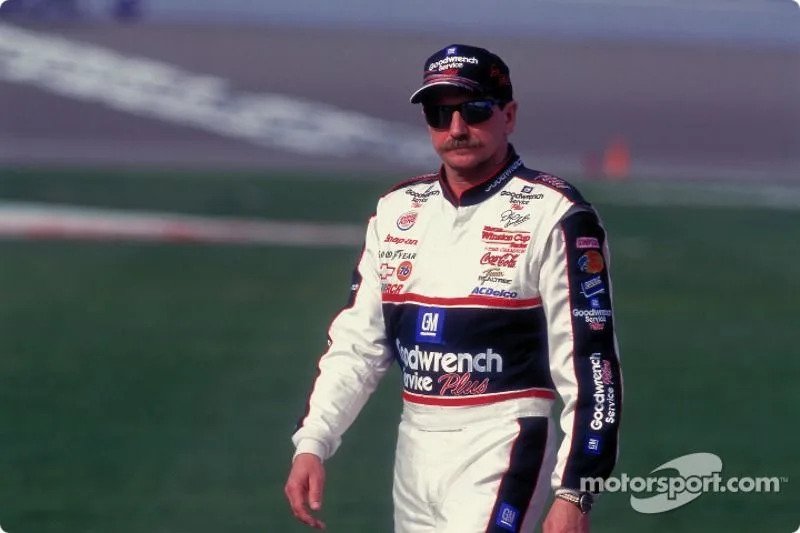
Dale Earnhardt
Then there’s NASCAR Hall of Famers Rusty Wallace and Kurt Busch, who were actually in the race that day. Kurt was still fairly new, and was actually on Earnhardt’s bad side in those final months. He remembers wrecking Dale Jr. during a 2000 race at Rockingham, drawing the ire of his famous father in a subsequent race at Homestead. Kurt tried to let the No. 3 go, but Earnhardt preferred to remain behind he future Cup champion, making him sweat before moving him out of the way. Even during that fateful race in 2001, Earnhardt gave Busch the middle finger for some other offense, drawing laughs from the RCR pit crew. Busch was doing his best to follow his team’s advice, to stick with the No. 3, but he ended up dooring the seven-time Cup champion.
Advertisement
“Dude, I can’t do anything right around this guy,” commented Busch. “I keep stepping on my toes right in front of him. Never did get to talk to him about it. Never did get to clear the air.”
“I remember the intensity was sky-high that day,” remarked Wallace. “But I think everyone expected Dale to win the race. They expected him to run up front. “
Wallace was directly behind Earnhardt as the crash took place, and remembered thinking Earnhardt was going to be mad about the last-lap crash, adding: “I’ve seen a lot of wrecks like this. I didn’t think it would be enough to be the last time I see Dale.”
Advertisement
The 1989 Cup Series champion, a long-time rival/friend of Earnhardt, then revealed that they both had their boats side-by-side, and had plans to meet there and chat about the race that night. Rusty sat there, looking over at the empty boat, in silence.
“It’s like the sport stopped,” said Busch, echoing McGee’s comments. “None of us knew where we were going. None of us knew what we were supposed to do next. It felt like all of us were lost puppies without an owner.”
Dale Earnhardt ambulance after his crash
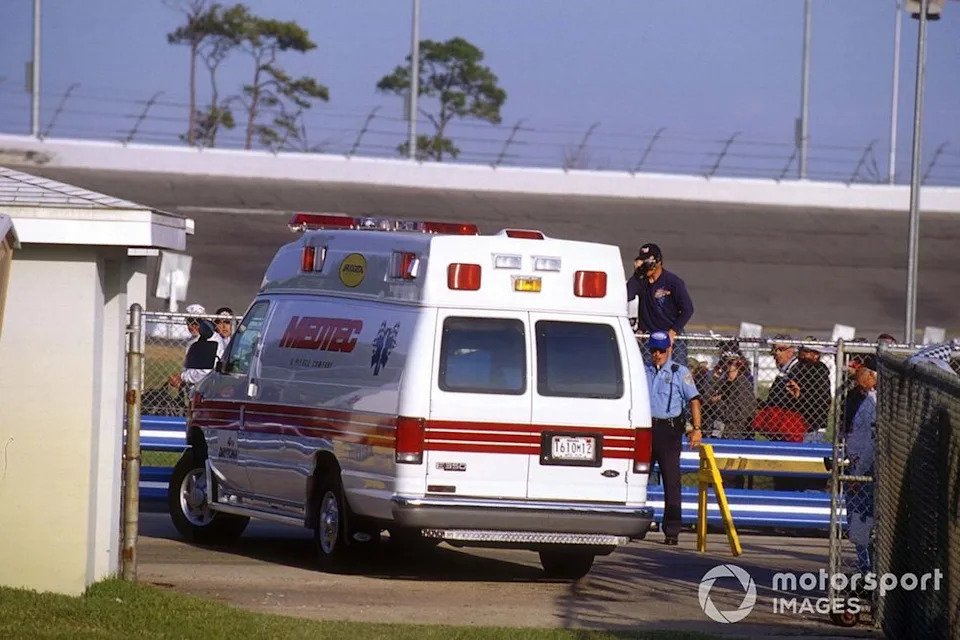
Dale Earnhardt ambulance after his crash
Another perspective came from Frankie Muniz, who currently races in the NASCAR Craftsman Truck Series. But at the time, he was the 15-year-old star of the sitcom, ‘Malcolm in the Middle.’ He was there for the 2001 Daytona 500, and was one of the last people to speak with Earnhardt before he climbed into the car.
Advertisement
They met at the driver’s meeting, and Earnhardt thanked him for his show, as it was something Dale and his young daughter, Taylor, bonded over. “Another he told me was ‘enjoy it, enjoy the run, because you never know when it’s going to end,'” remembered Muniz. They crossed paths again on the grid, and shook hands before the engines were fired. He enjoyed the race, and had no idea about the severity of the accident until he was watching Helton on the hotel TV, hours later.
But that’s just scratching the surface of the hour-long documentary. It goes more into the legacy of Earnhardt, and the safety upgrades created as a result of his death. Logano remembered getting himself fitted for a HANS Device that had to be custom-made, because he was ten and they didn’t make them for children yet. However, the HANS still wasn’t mandated until the death of ARCA star Blaise Alexander in the heart of NASCAR (Charlotte), a few months after Earnhardt’s passing.
But the sport didn’t stop there, implementing soft walls and developing the Car of Tomorrow to keep drivers safe.
Advertisement
“The wreck that killed Dale Earnhardt has happened many times since, maybe even harder,” declared Logano. And perhaps that is the most important thing Earnhardt gave the sport of NASCAR — a future without as many funerals.
My perspective and other thoughts
Dale Earnhardt
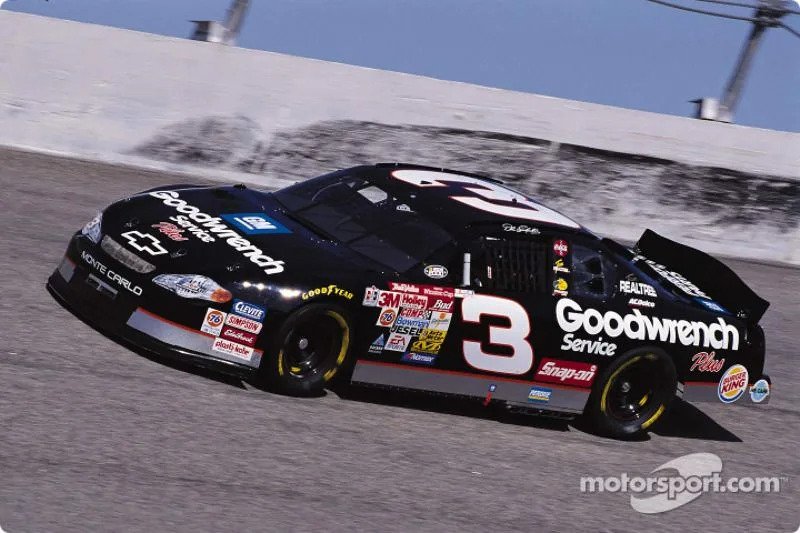
Dale Earnhardt
The special is definitely worth a watch, and now I want to share my own story of that day, pinning it onto end of this piece. I also welcome any of you reading to include your memories of Dale or that day, and its impact on you in the comments below.
Advertisement
I was seven years old, but already a huge race fan. My brother was a few years older, and to me, the 2001 Daytona 500 was just an exciting NASCAR finish to watch with dinner. Later that night, I could hear my parents talking downstairs, before calling my older brother down. I crept out my door, eager to listen in on whatever was happening.
My dad started talking about Davey Allison, Alan Kulwicki, and Neil Bonnett — all stars of the sport who died suddenly in the mid-90s. And then he told him the news, and while he didn’t know it at the time, he told me as well. I wasn’t sure how to process it, or what it meant. Heroes don’t die, especially not in the mind of a seven-year-old. But this one did.
After that, I only became more invested in NASCAR and racing as a whole, now seeing it differently than other sports. It wasn’t the threat of death, but the sudden realization of what these people were willing to risk in pursuit of a checkered flag. And more than that, it was the fact that despite Dale’s death, DEI went out there and won the very next weekend, and then RCR a few weeks after that, and finally Dale Jr. in NASCAR’s first race back at Daytona. Those months that followed Dale’s passing shaped my life outlook on death, loss, and grief.
Advertisement
As time progressed, I just wanted to consume every aspect of all motorsports. I wanted to know the name of every hero, past and present. I wanted to make sure they were remembered, and that I knew their stories. I stayed up late to watch V8 Supercars, woke up early to watch F1, flipped channels between NASCAR, IndyCar, Champ Car, ALMS and Grand-Am during the afternoon.
I drew the black No. 3 incessantly in the margins of my school work, and started writing about NASCAR for fun. I scribbled down all of Dale’s stats, wanting to preserve it in my own way. And then I began to write stories, some about the sport’s history, and some that were completely fictional. Now, 25 years later, I’m still scribbling down my thoughts about NASCAR and anything else with an engine. I don’t think that happens without Dale Earnhardt.
It’s amazing to think about all the lives Dale touched, and the positive impact he continues to leave on this world as NASCAR races into its 78th season. And so we should smile in remembrance, despite the sadness of that day, despite what was lost … And to borrow the words of Bruce McLaren, another titan of motorsport who gave his life to the furthering of it:
Advertisement
“To do something well is so worthwhile that to die trying to do it better cannot be foolhardy. It would be a waste of life to do nothing with one’s ability, for I feel that life is measured in achievement, not in years alone.”
To read more Motorsport.com articles visit our website.
Read the full article here