

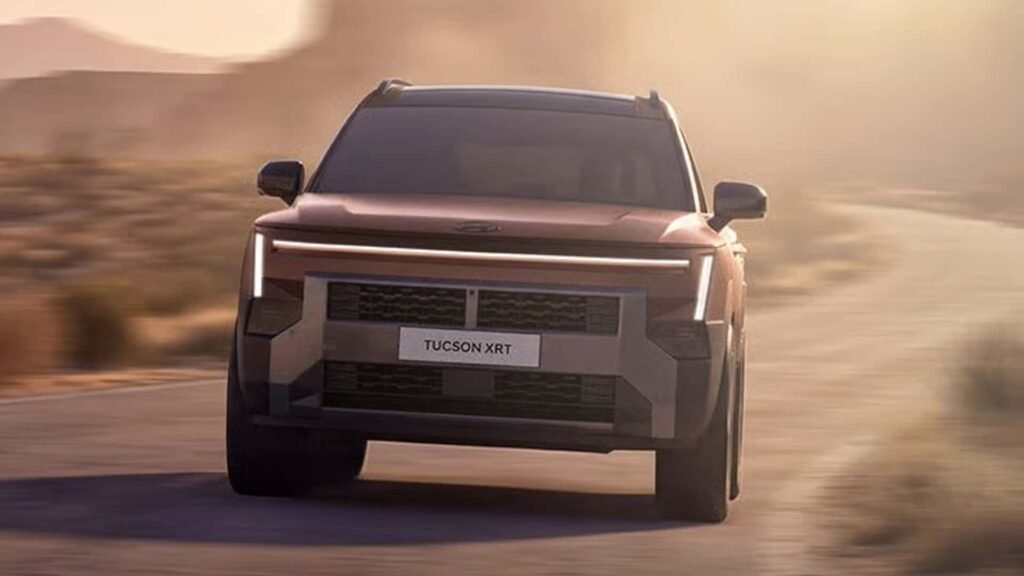
• The new Tucson will be available with a hybrid powertrain centered around a turbocharged 1.6-liter gasoline engine.
  • A non-electrified version of the same engine is also planned.
  • Hyundai will launch the compact crossover in Korea in Q4 2026, with a global rollout to follow in 2027.

As we dig through Hyundai’s gargantuan 101-page presentation prepared for investors this week, we keep finding nuggets of new information about upcoming models. After learning there’s a new lineup of cheaper performance cars along with range-extended electric vehicles, we can now share the first technical specifications of the 2027 Tucson.

The compact crossover has been massively redesigned for its next generation, and it has better numbers to go along with the drastic overhaul. An upgraded hybrid powertrain centered around a turbocharged 1.6-liter gasoline engine will deliver a bit more horsepower and torque than the outgoing model. Hyundai has rated the electrified Tucson at 242 hp and 280 lb-ft (380 Nm), resulting in an increase of 11 hp and 9 lb-ft (12 Nm).

The new Tucson Hybrid will take eight and a half seconds to reach 62 mph (100 km/h), making it 0.3 seconds quicker than its predecessor. It certainly won’t set your pulse racing, but that’s not the point since the hybrid is all about efficiency. Speaking of which, Hyundai claims it does 17.4 kilometers per liter, which works out to nearly 41 miles per gallon.

Photo by: Hyundai

However, we need to make an important distinction. Hyundai’s fuel efficiency figures are based on the Korean test cycle, so the EPA numbers will be different. As a refresher, the outgoing model does up to 38 mpg in the combined cycle. This new generation is larger and therefore likely heavier than its predecessor, so the growth spurt might mostly negate any improvements to the hybrid powertrain.

Hyundai will also sell the sixth-generation Tucson with a non-electrified 1.6-liter turbo engine. It will have 27 percent less horsepower and 43 percent less torque than the hybrid, so expect around 177 hp and 160 lb-ft (217 Nm). It’ll also be considerably slower, taking a full second more to reach 62 mph (100 km/h), at 9.5 seconds.


<p><em>2027 Hyundai Tucson</em></p>

Photo by: Hyundai

Of course, the new Tucson with a conventional gas engine will be far less friendly at the pump. Hyundai says the ICE-only model has 43 percent worse fuel economy than the hybrid. Depending on mileage, hybrid owners can offset the purchase price difference by making fewer stops at the gas station.

Other powertrains have not been confirmed, but it’s reasonable to expect a plug-in hybrid and maybe even a diesel in a few markets with more relaxed emissions regulations.

The next-gen Tucson goes on sale in the fourth quarter of the year at home in Korea, with a global rollout to follow in 2027.


Motor1’s Take: The 2027 Tucson’s extra power and torque are welcome improvements, but the hybrid’s real advantage should remain its efficiency rather than performance. The big question is whether the larger, potentially heavier body will eat into the gains made by the upgraded powertrain. Until we get EPA figures, it’s too early to say whether the new Tucson Hybrid will actually be more economical in the real world.

The conventional 1.6-liter turbo is a more interesting proposition in markets where hybrids remain significantly more expensive, especially if Hyundai can keep the price gap substantial enough to justify its higher fuel consumption. Those who intend to keep the vehicle for a long time will be better off with the hybrid.

Read the full article here

Leave A Reply